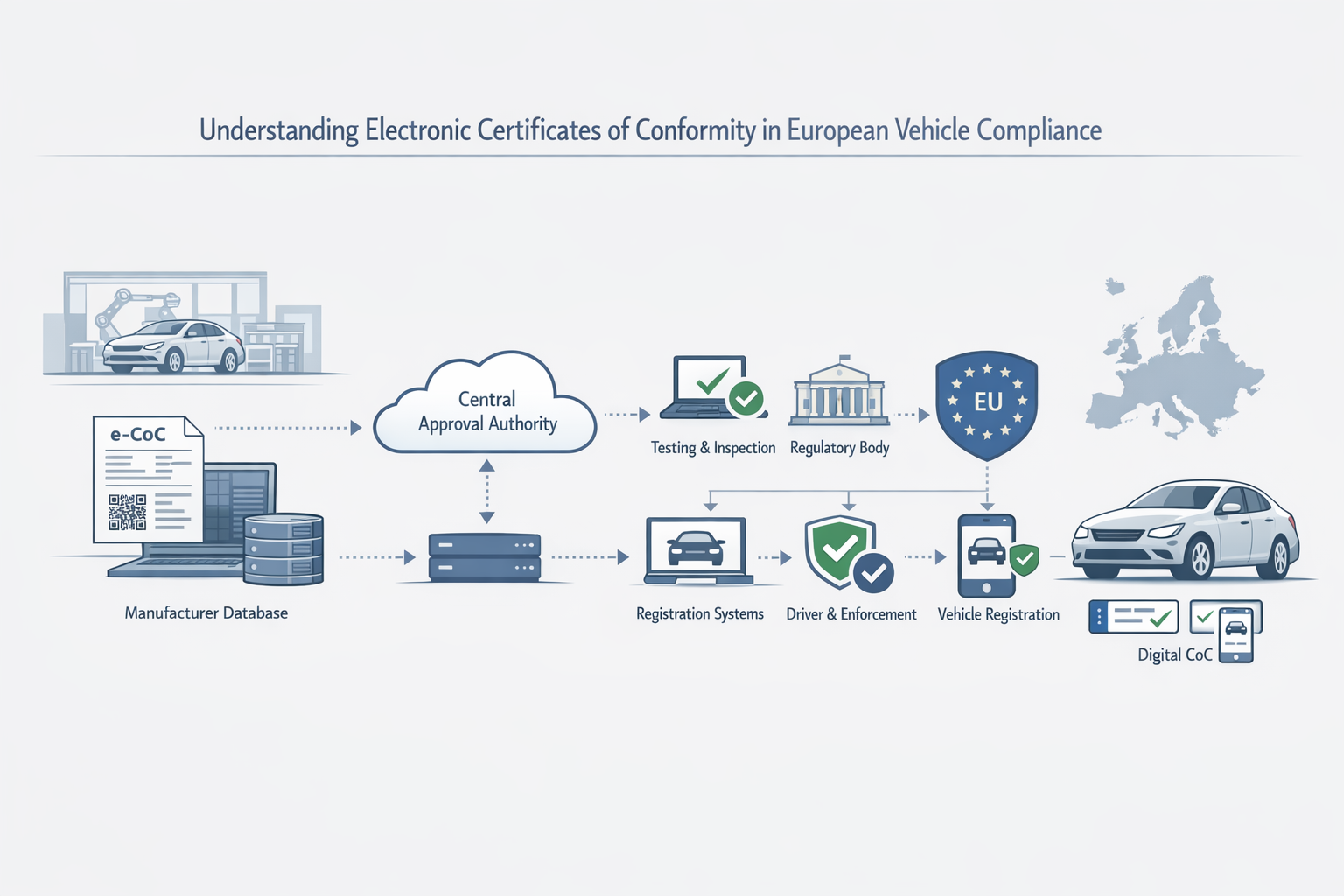
Understanding Electronic Certificates of Conformity in European Vehicle Compliance
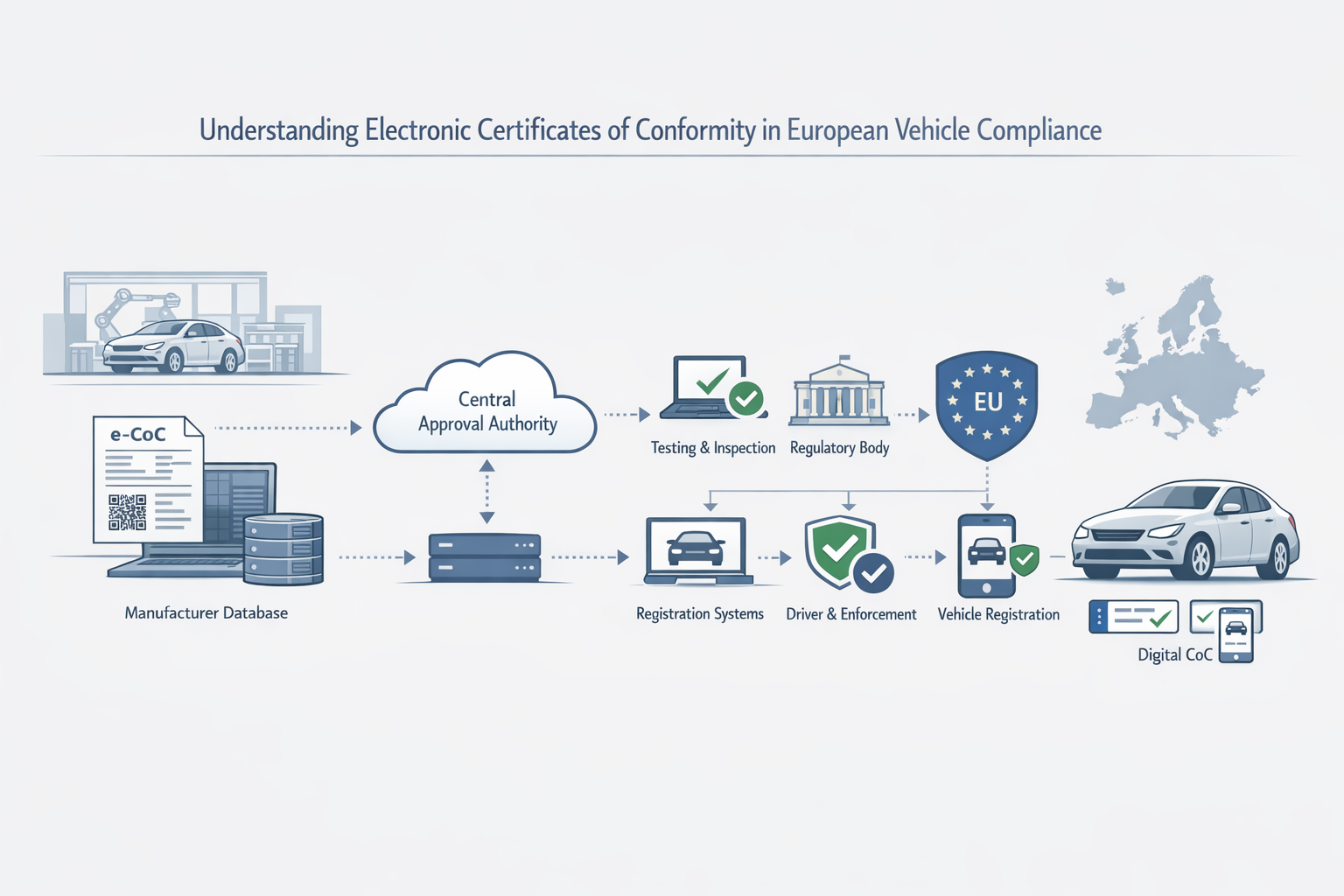
Learn how electronic Certificates of Conformity (eCoC) support vehicle approval and compliance processes across Europe.
Knowledge Hub
The European vehicle compliance ecosystem connects electronic conformity outputs, type approval references, IVI structures, cross-border verification and continuous data governance. This hub brings those topics into one crawlable navigation layer.
Explore the BlogCore guides for electronic conformity outputs, paper-to-digital transition and release-ready eCoC operations.

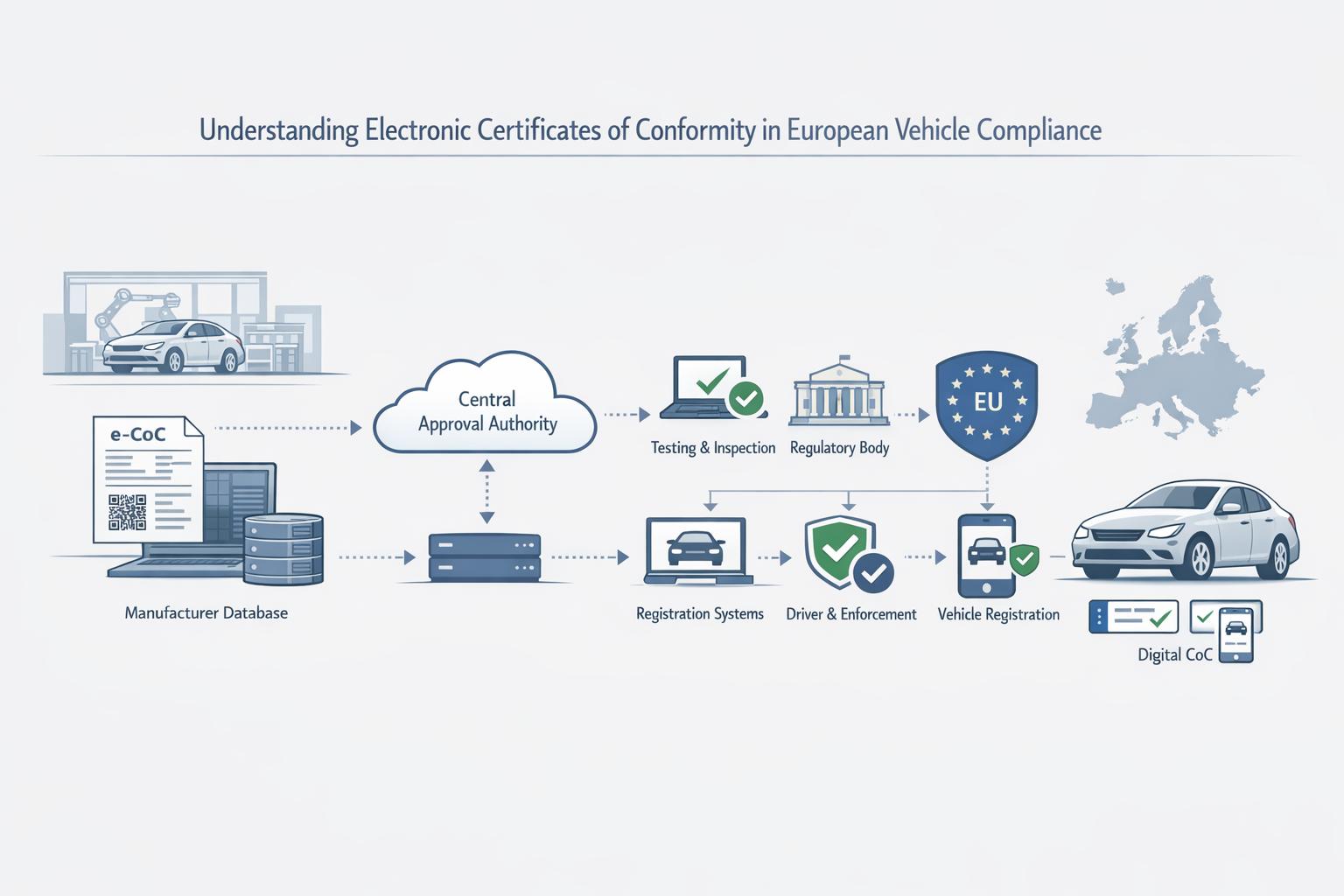
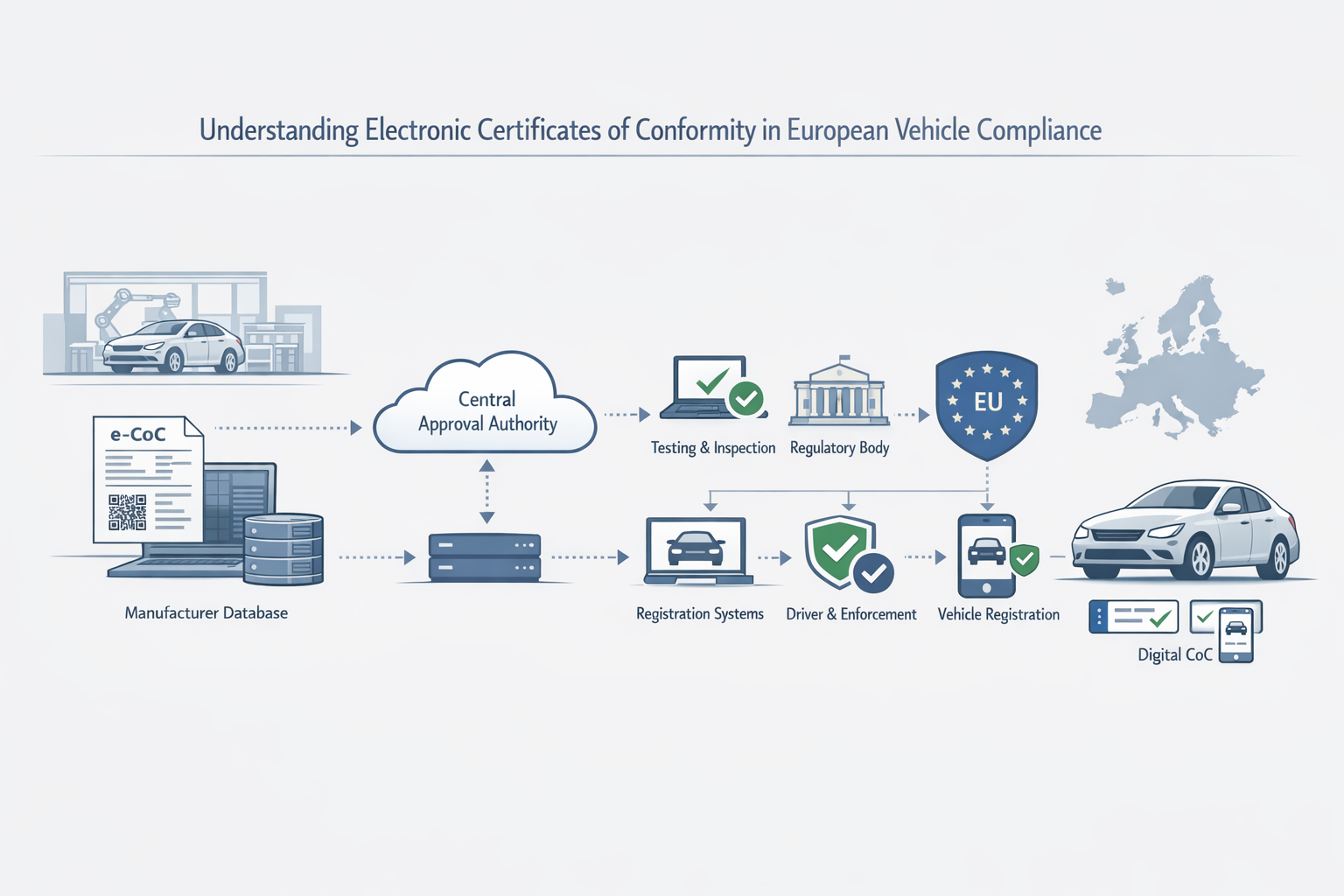
Learn how electronic Certificates of Conformity (eCoC) support vehicle approval and compliance processes across Europe.

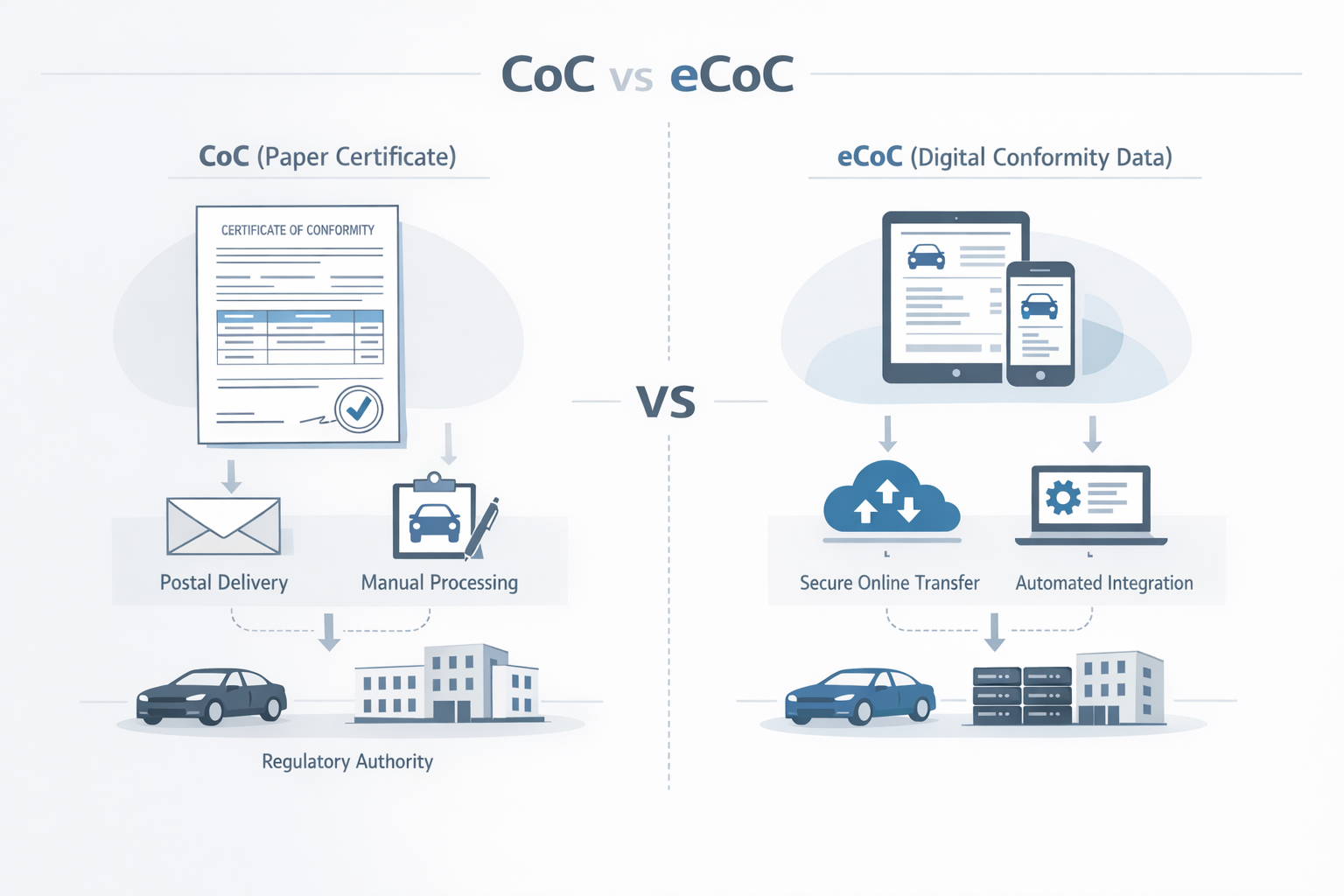
What is the difference between CoC and eCoC? Learn how electronic Certificates of Conformity differ from traditional conformity documents in European vehicle compliance.

Learn how the European eCoC transition moves manufacturers from paper Certificates of Conformity to structured electronic data workflows.

Understand the eCoC XML requirements manufacturers need to control before submission, including data quality, approval references and validation readiness.
Approval lifecycle, reference integrity, multistage production and documentation control across the vehicle program.

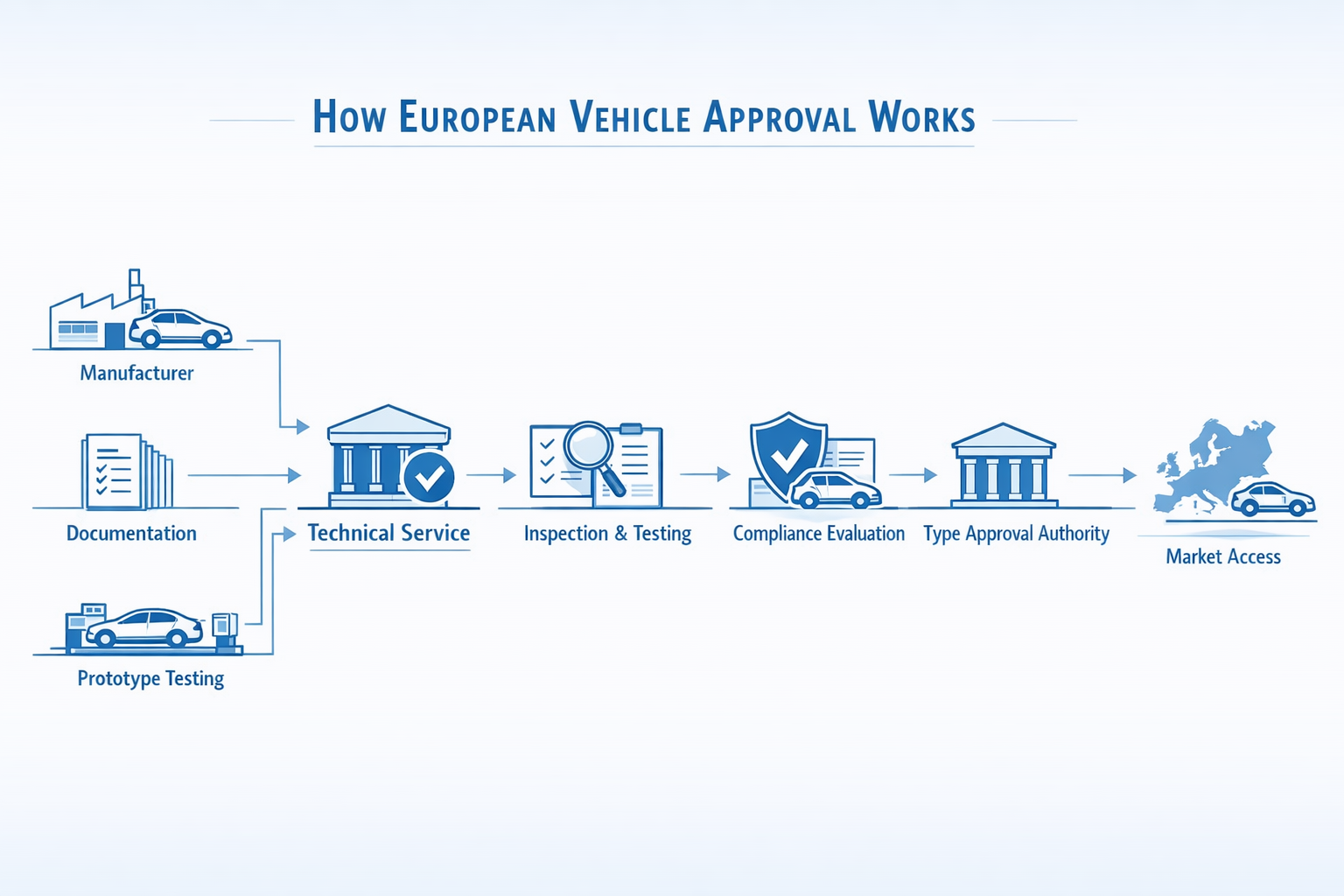
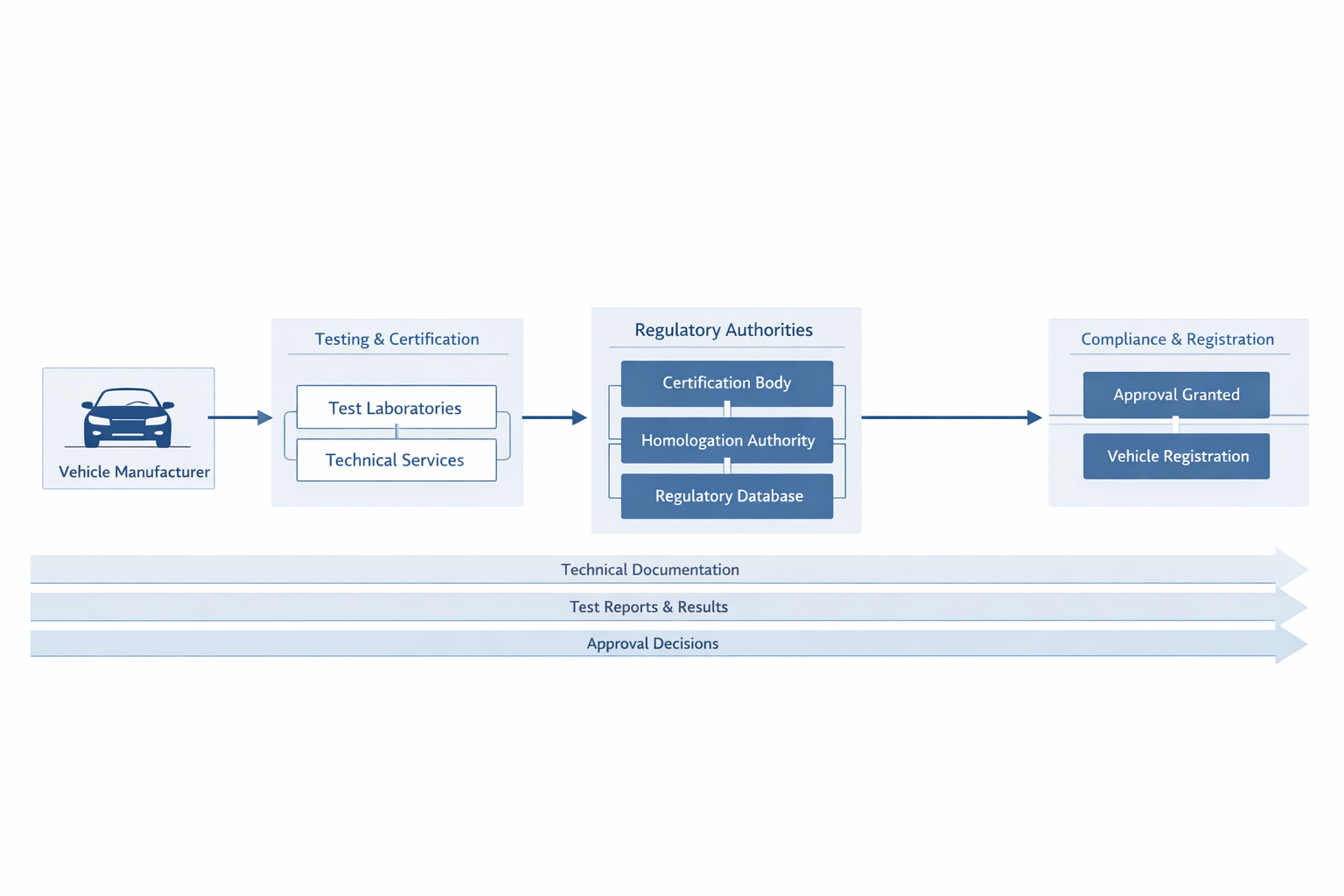
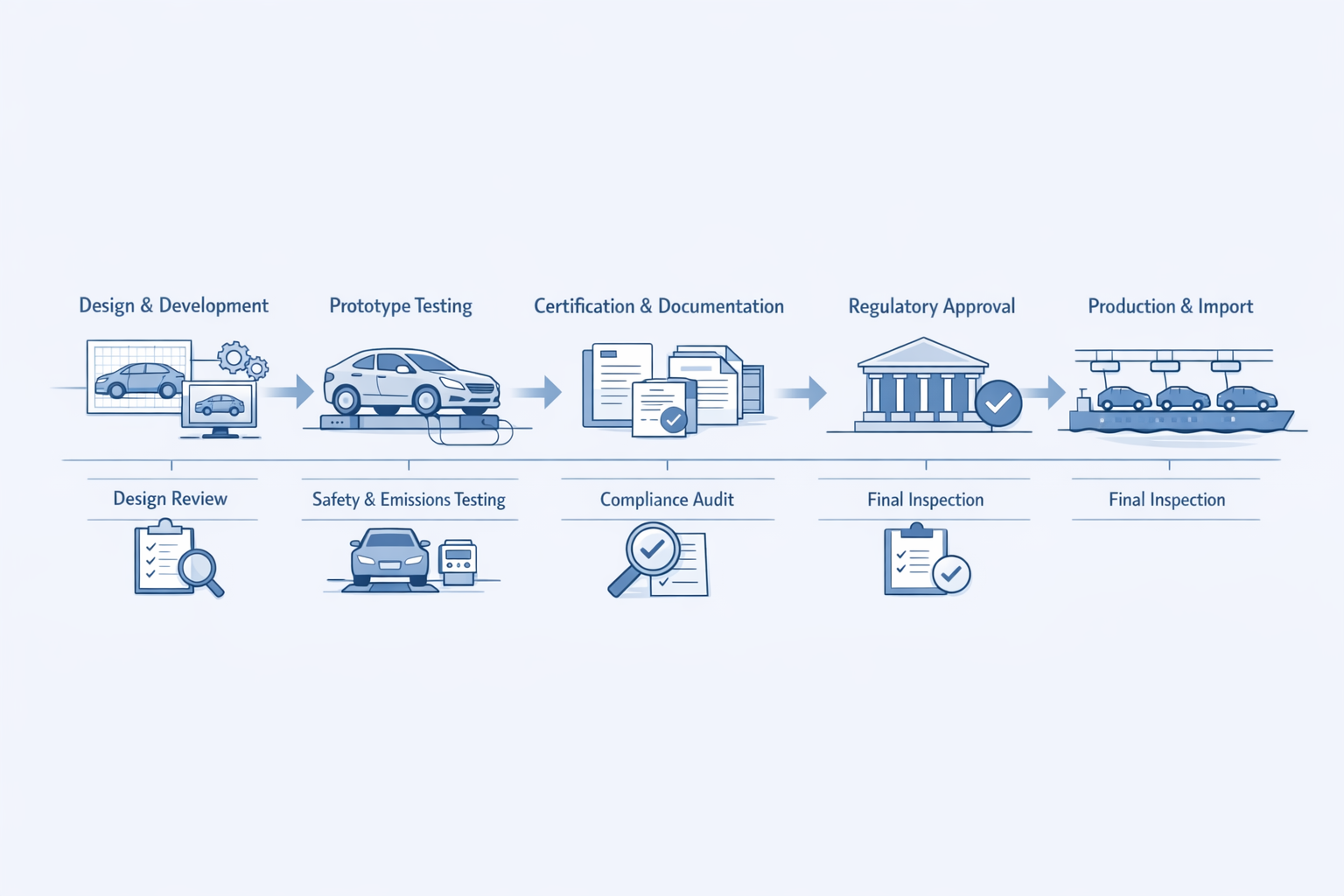
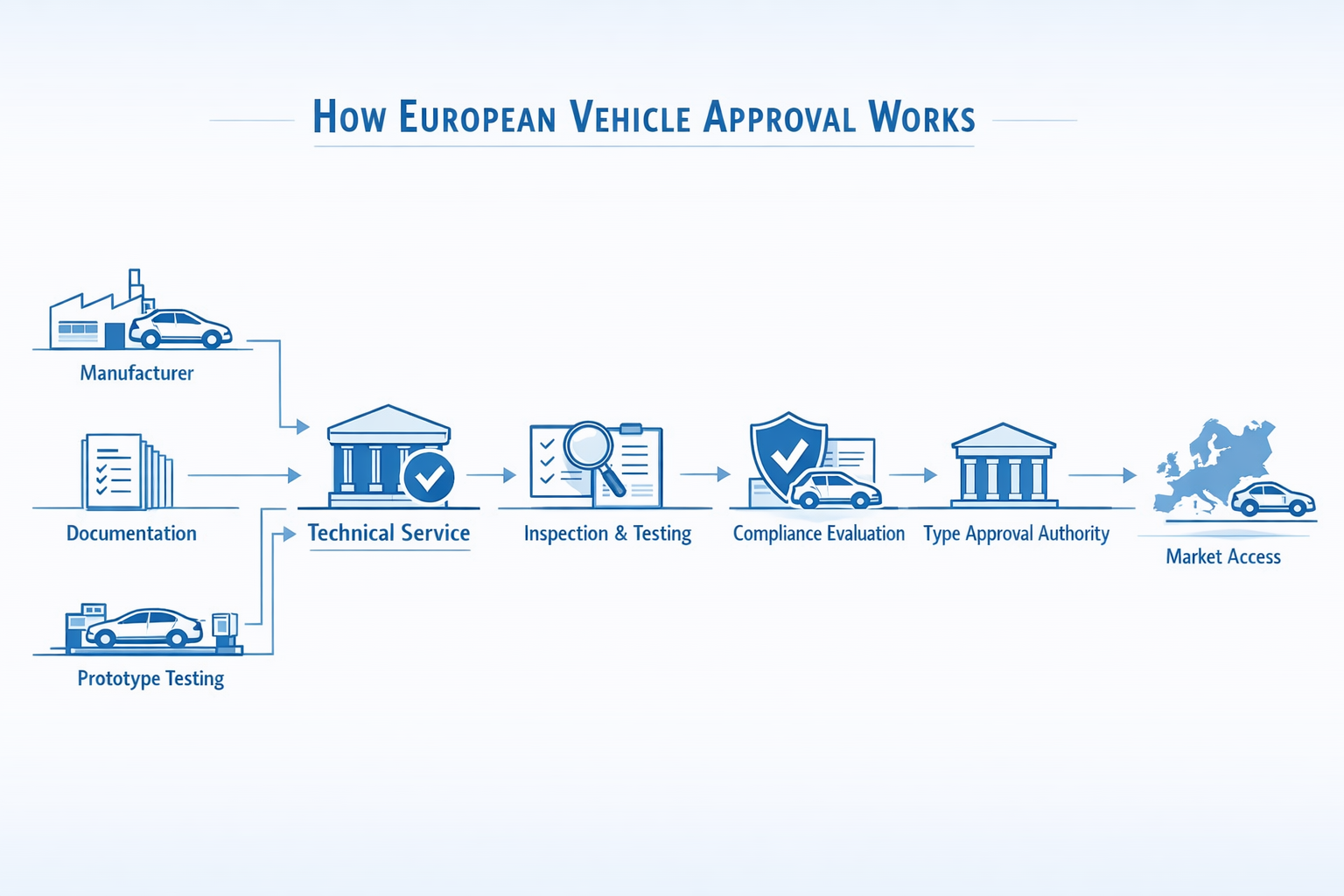
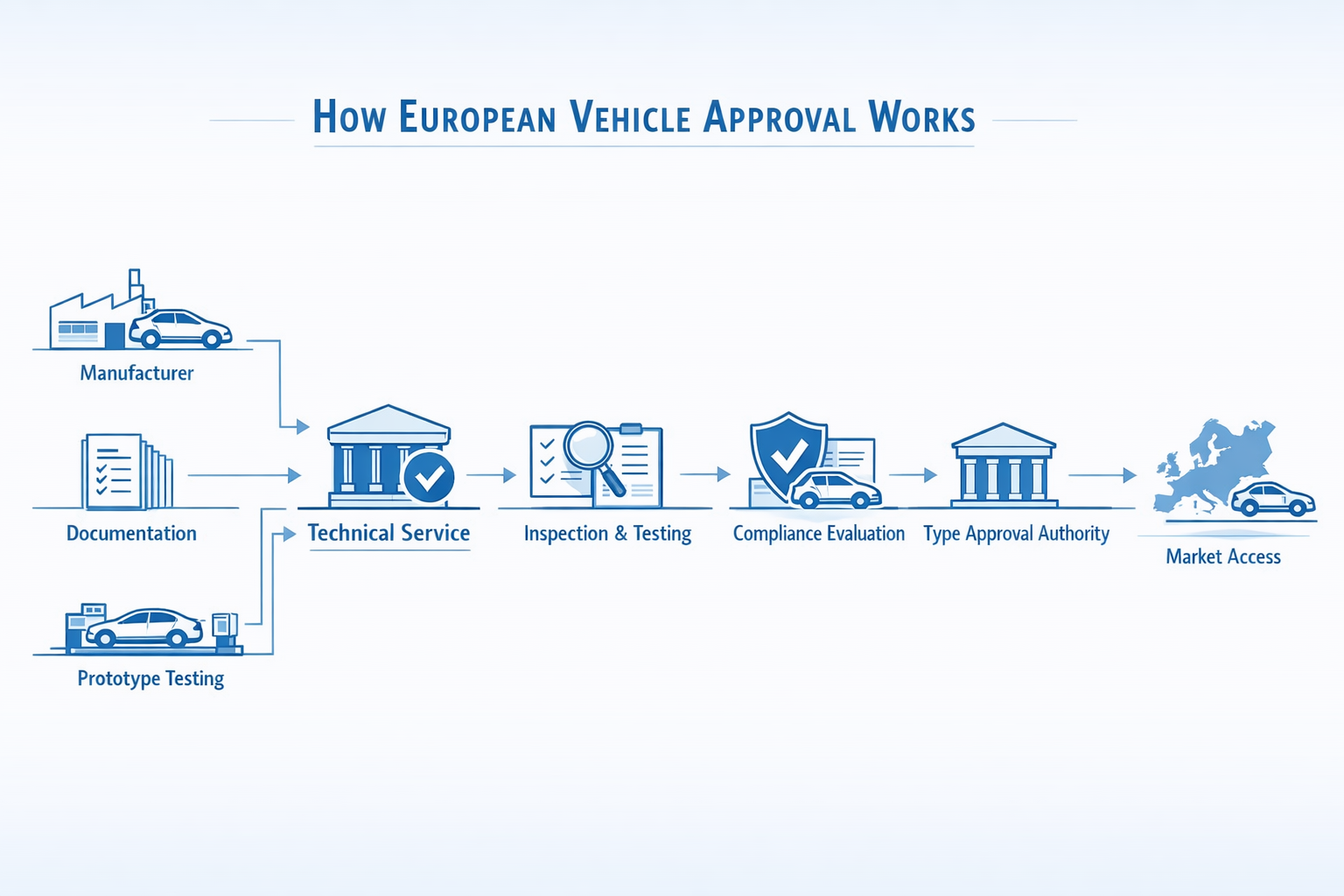
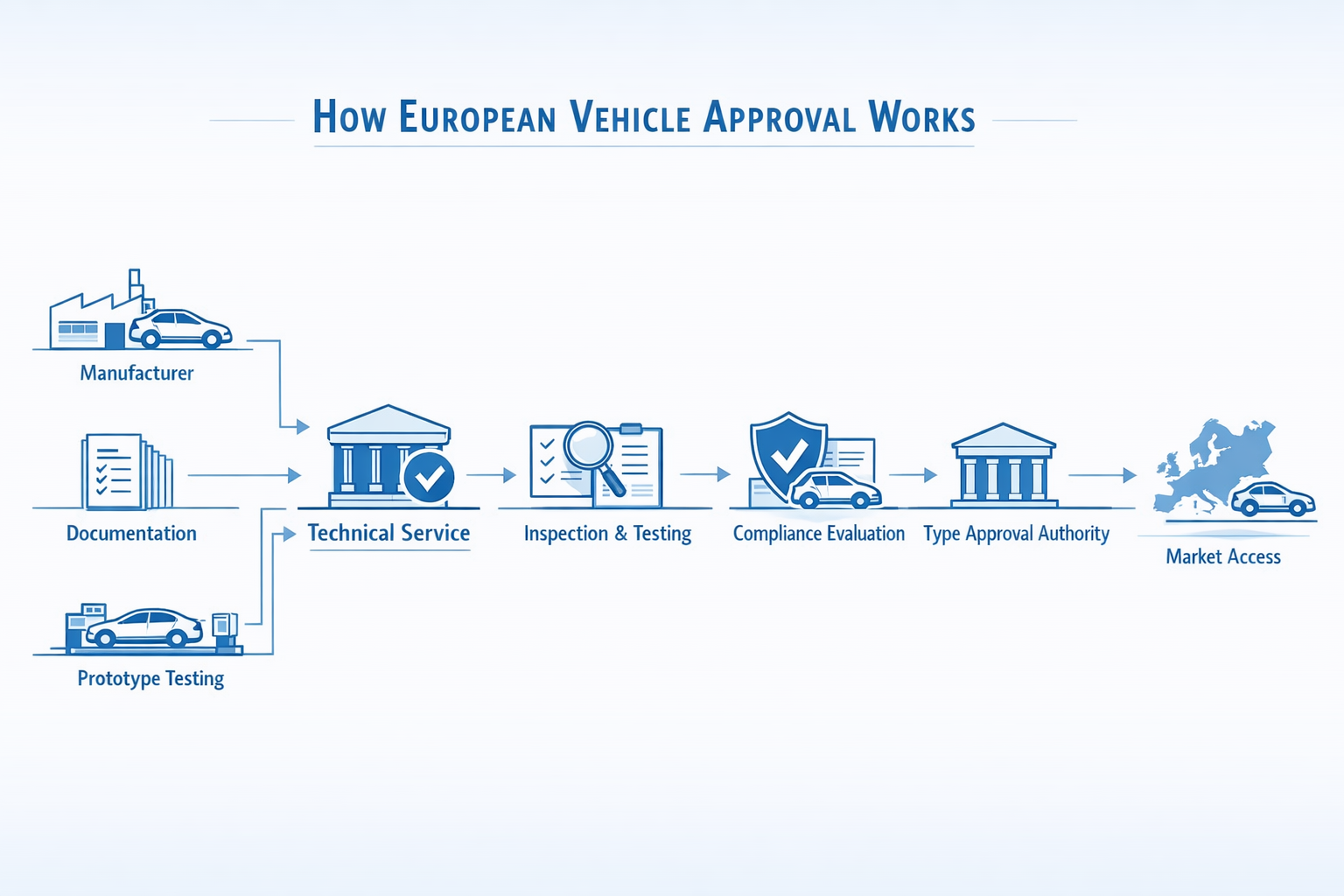
Learn how the European vehicle type approval system works and how vehicles are verified for compliance before entering the EU market.

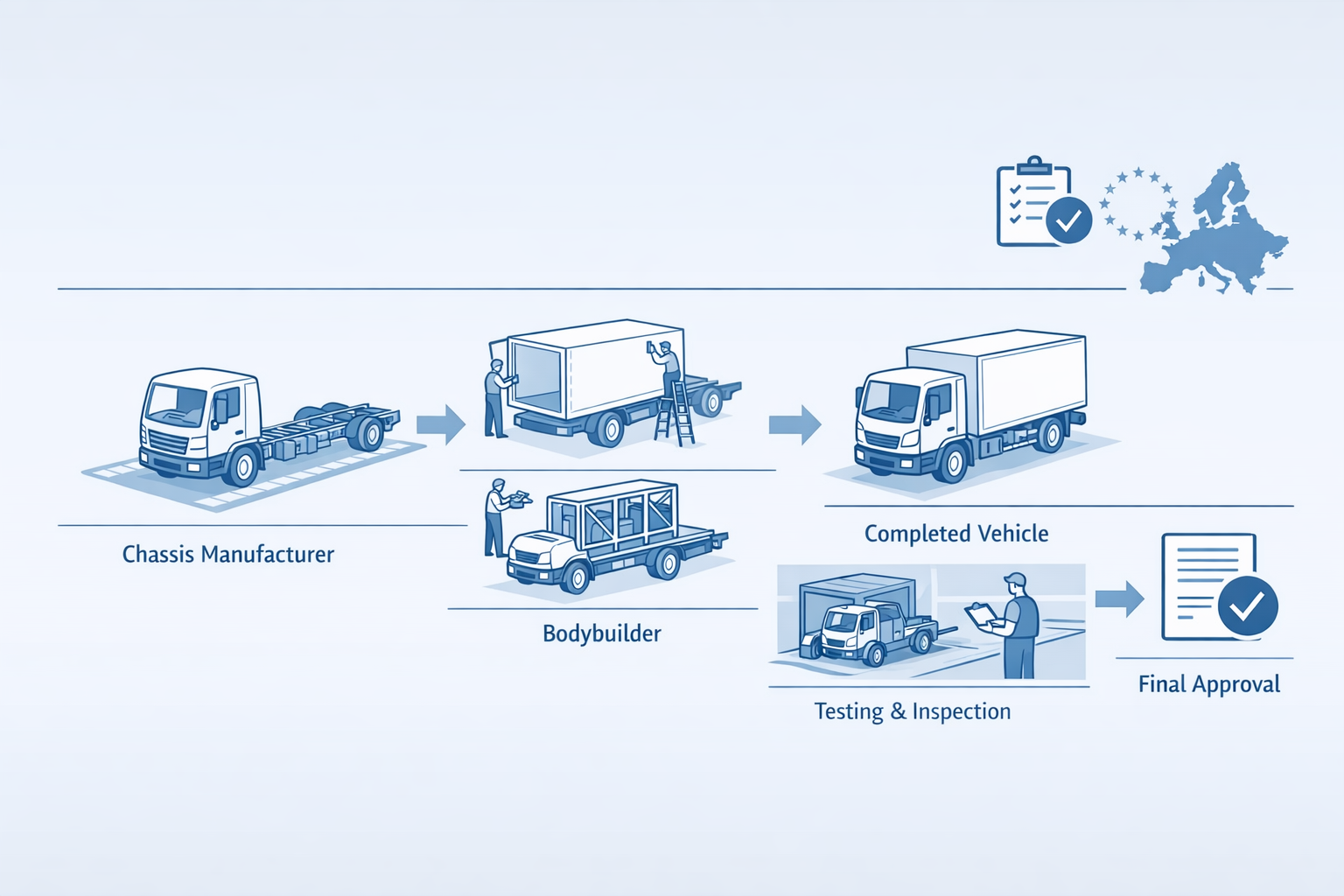
Learn how multistage vehicle approval works in Europe and how different manufacturers contribute to the compliance of specialized vehicles.

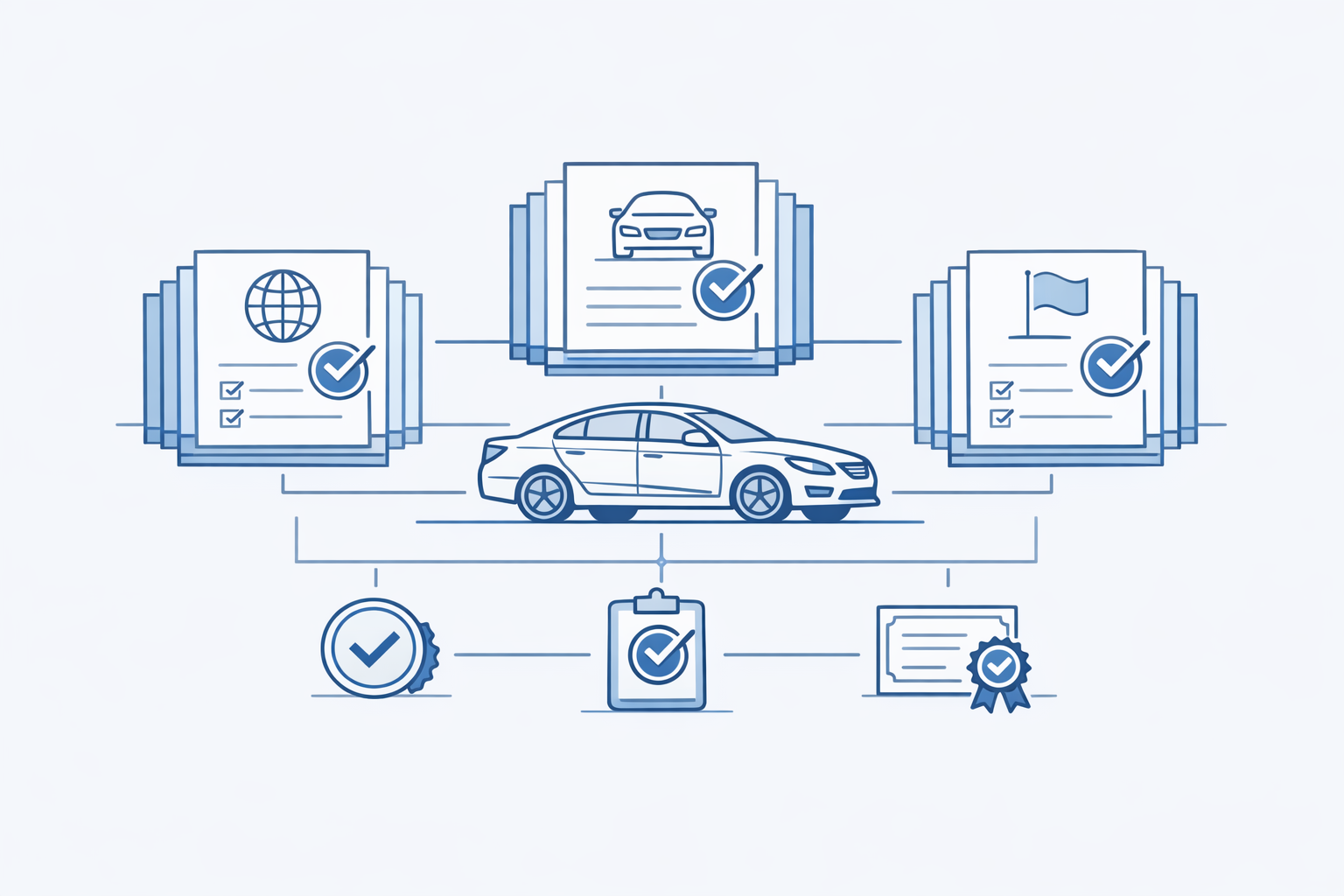
Vehicle approval documentation must remain consistent across regulatory systems. Learn why documentation alignment is essential for automotive compliance.

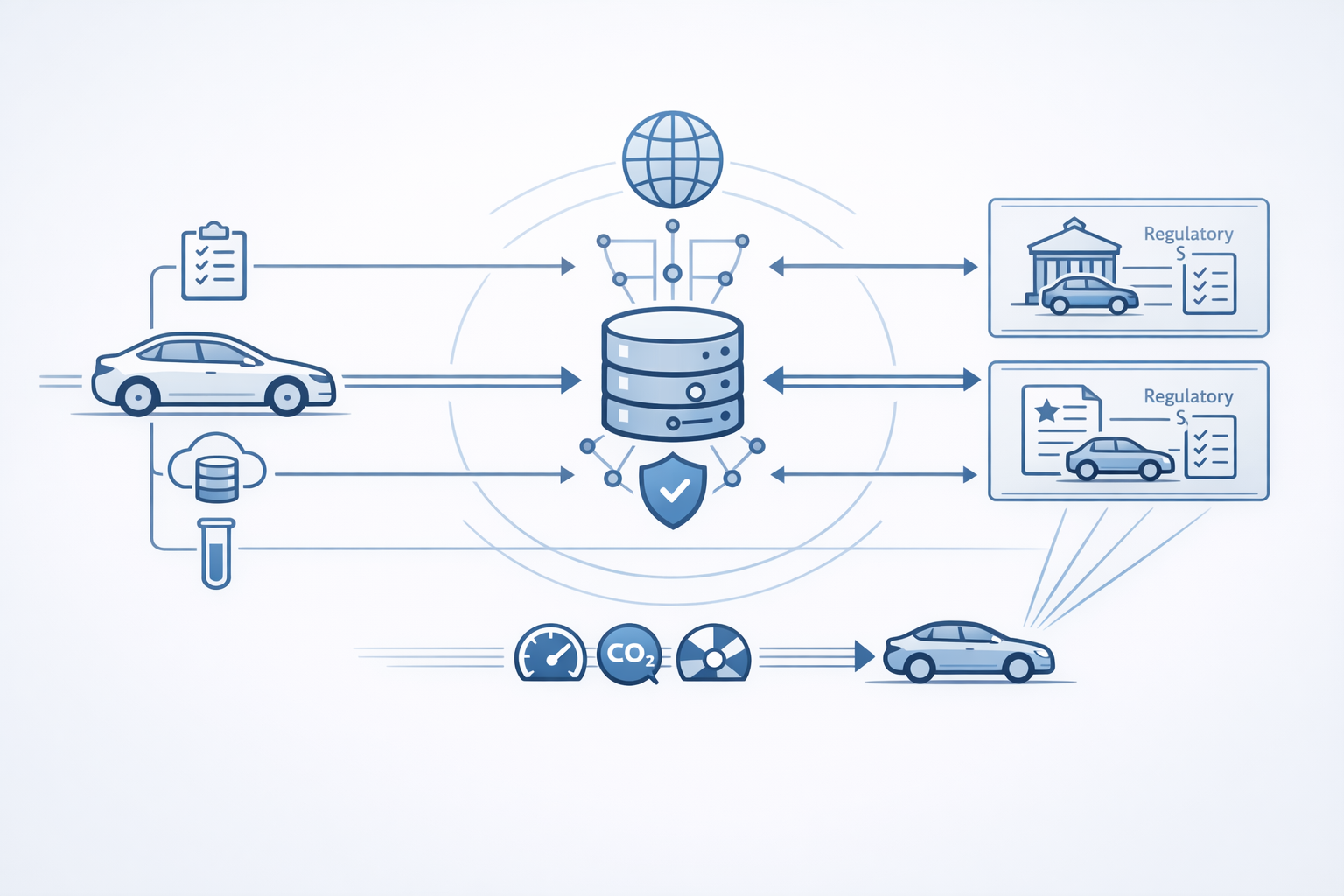
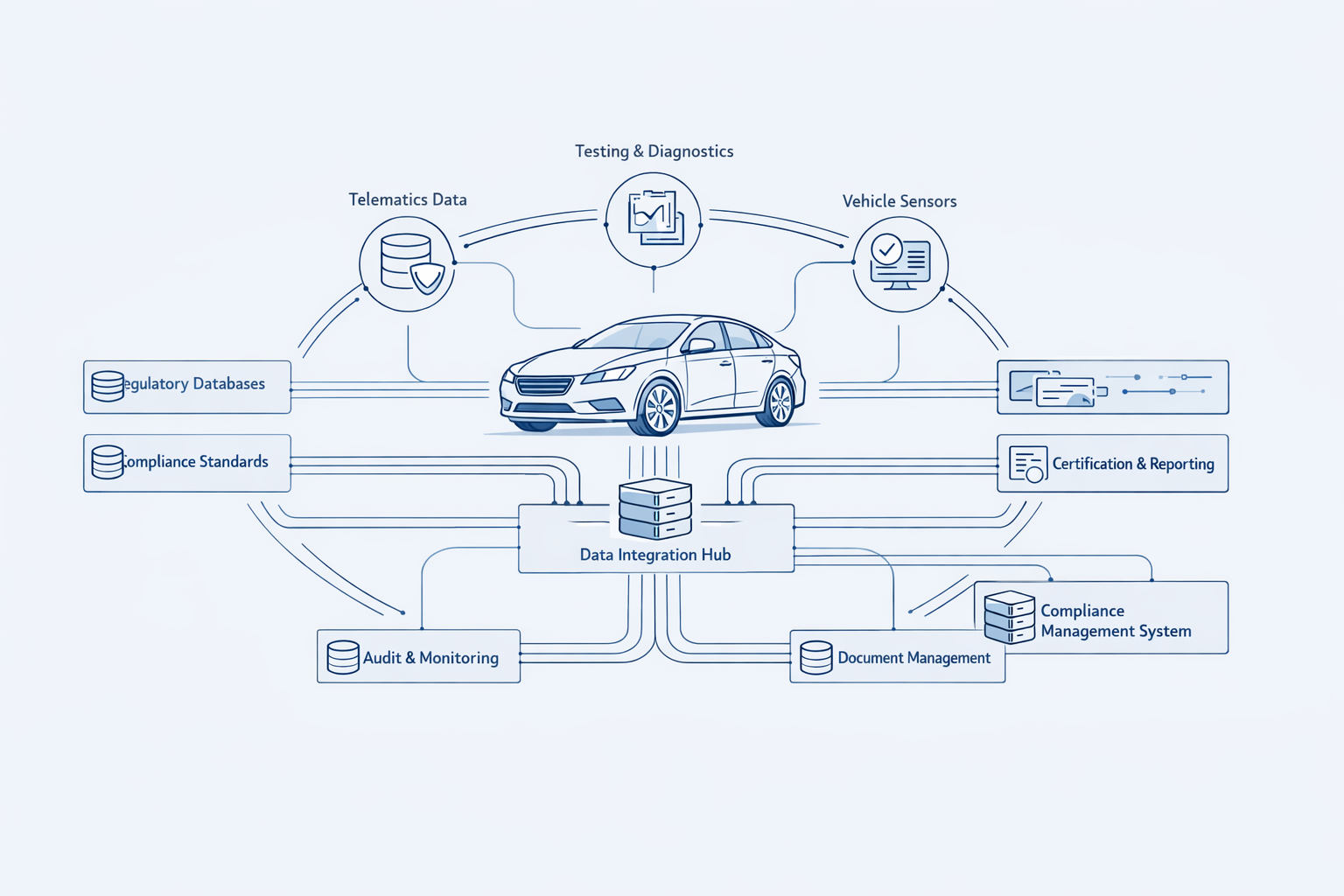
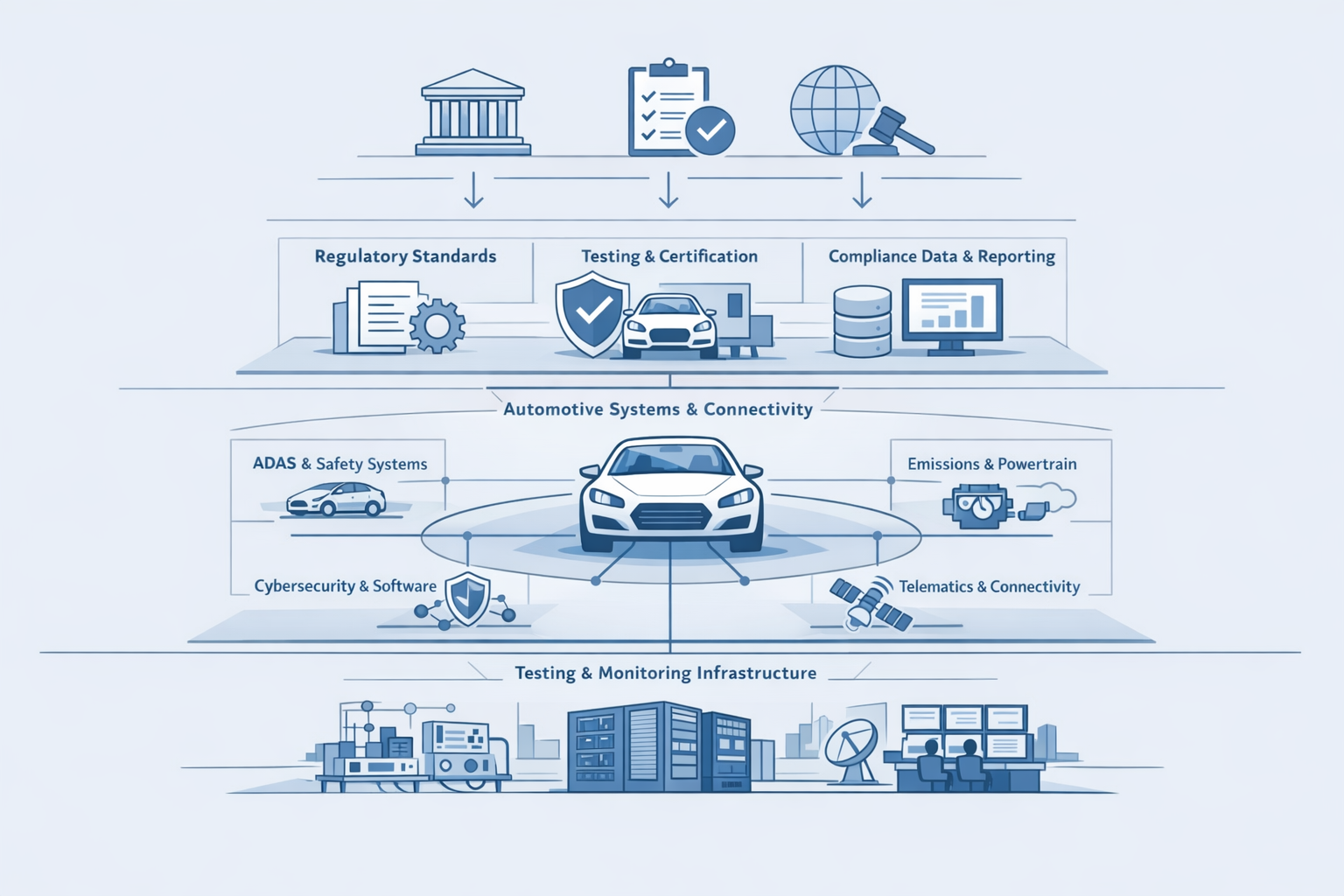
Discover how vehicle approval data moves across automotive regulatory systems and why structured data flows are important for compliance processes.
Initial Vehicle Information, structured vehicle data and conformity datasets used across regulatory systems.

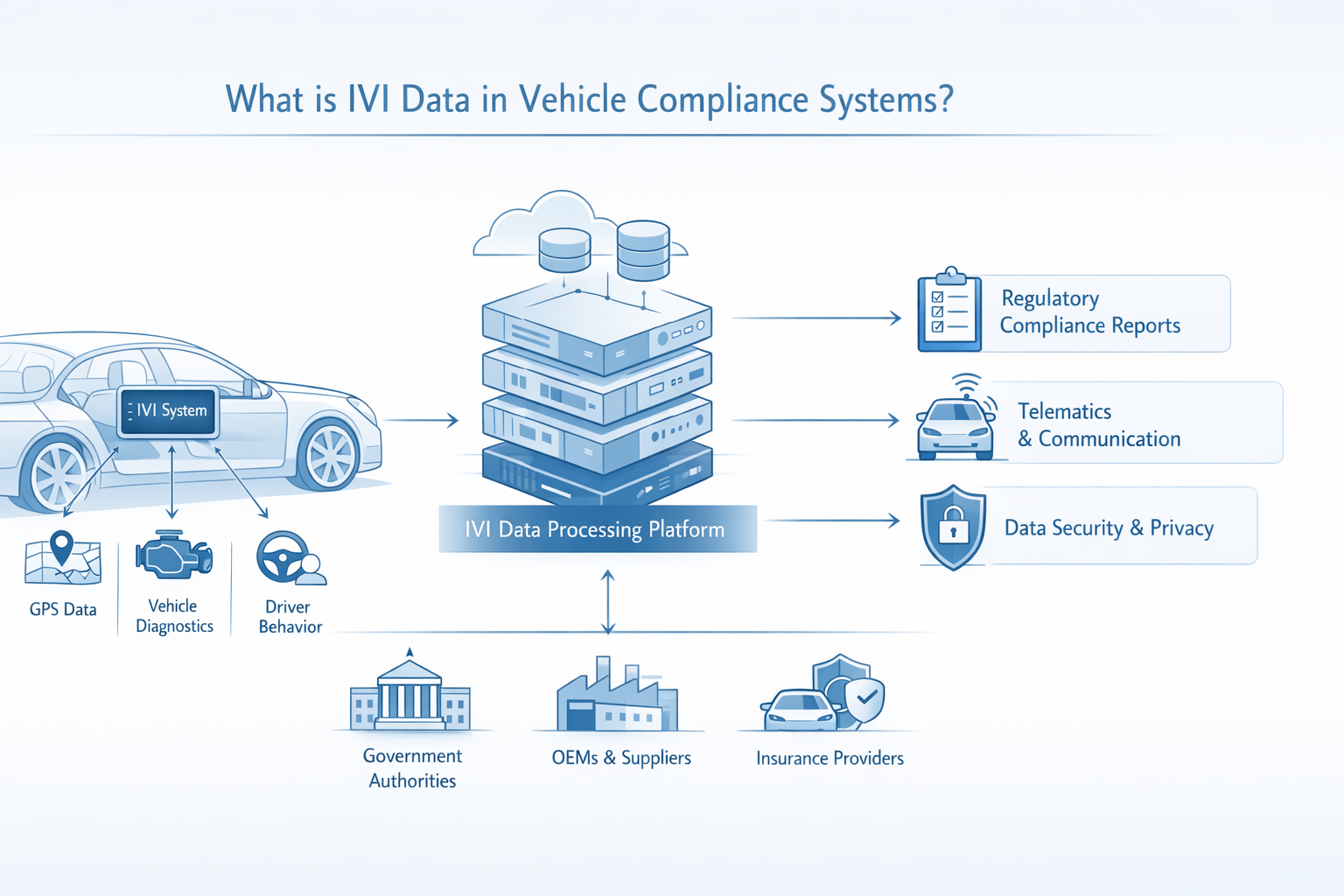
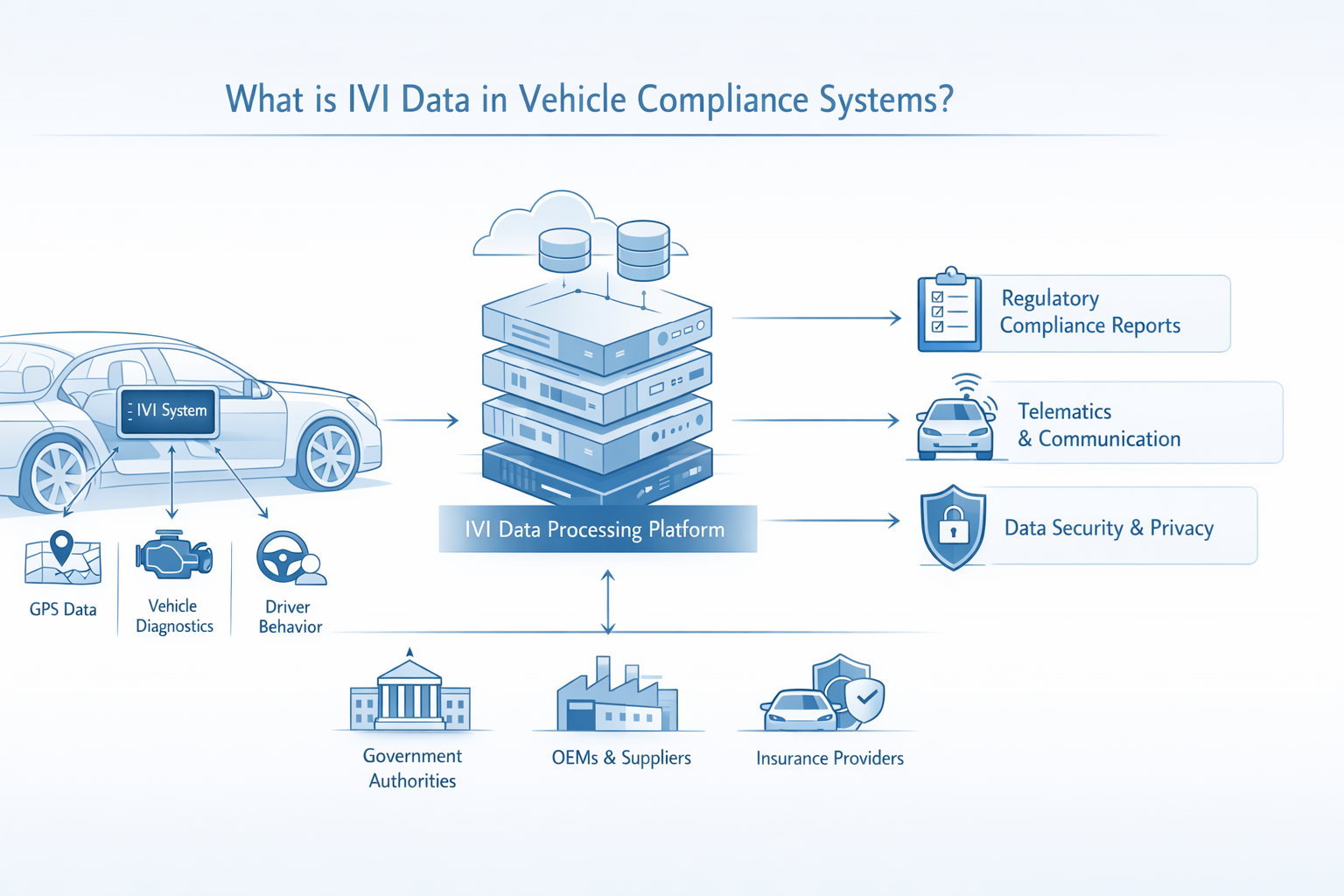
Learn what IVI (Initial Vehicle Information) data represents and how it supports vehicle conformity and regulatory data exchange in European compliance systems.

Learn how manufacturers prepare IVI XML for electronic CoC submission and why structured vehicle data governance matters before release.

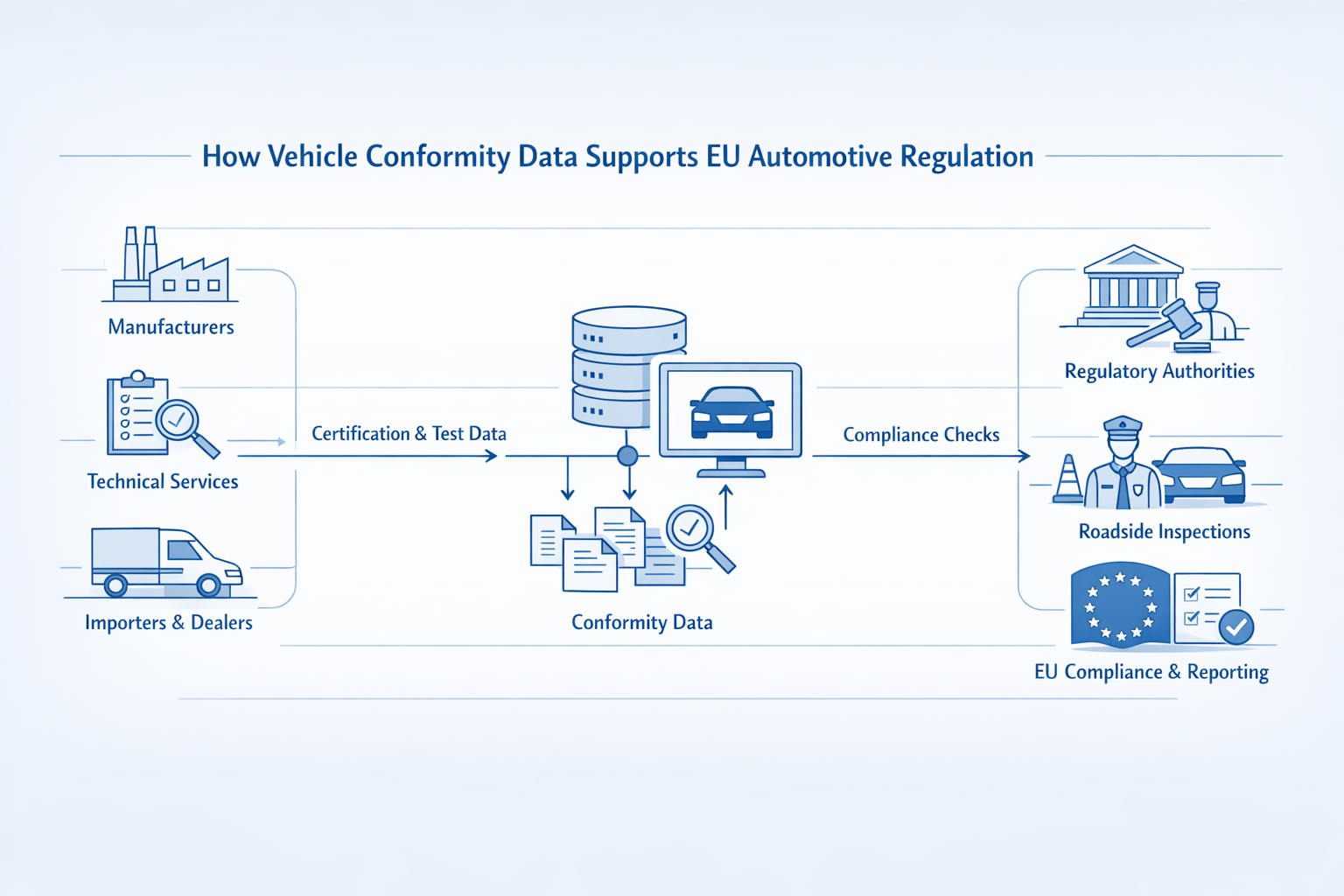
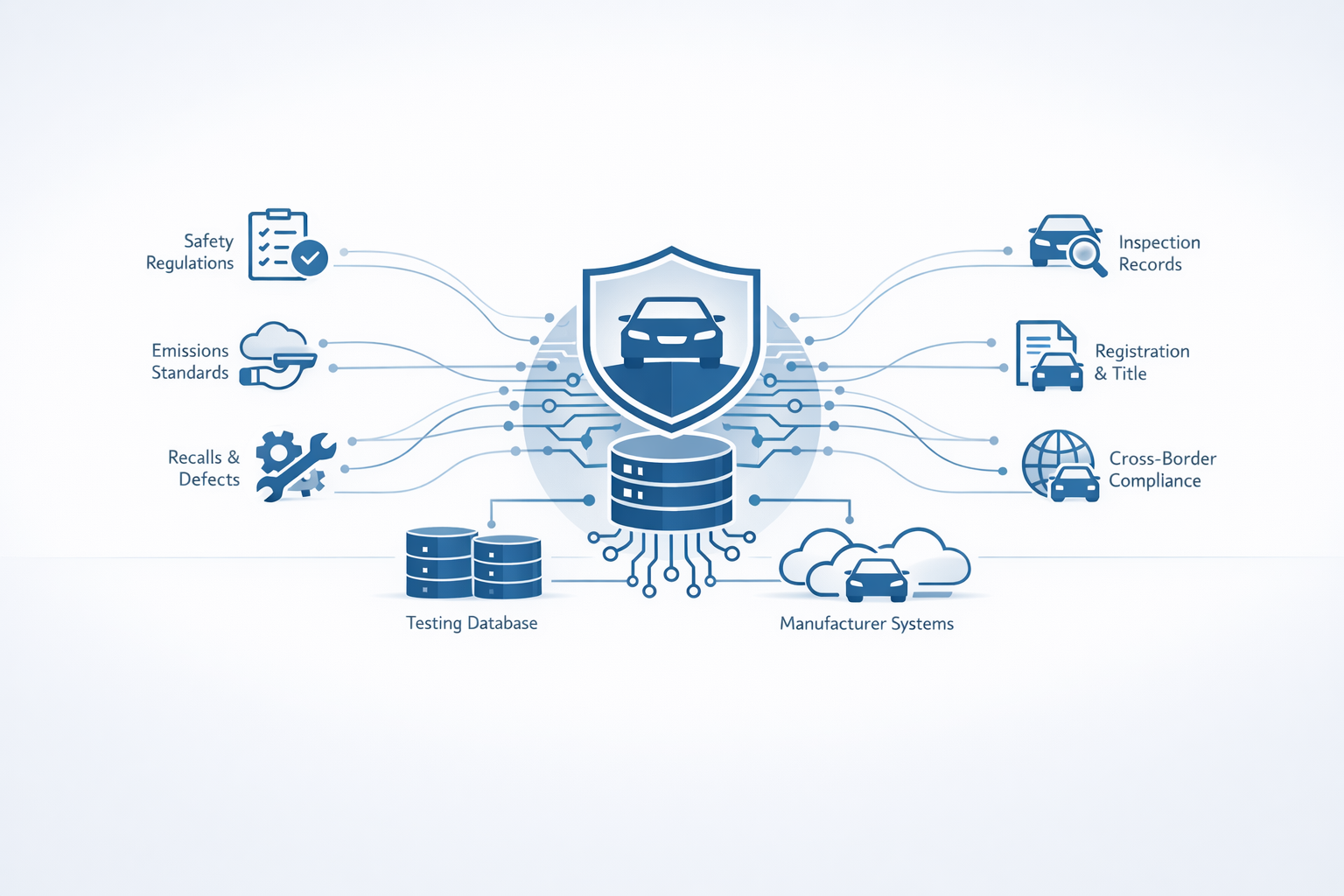
Understand how vehicle conformity data supports European automotive regulation and why accurate regulatory datasets are critical for compliance processes.

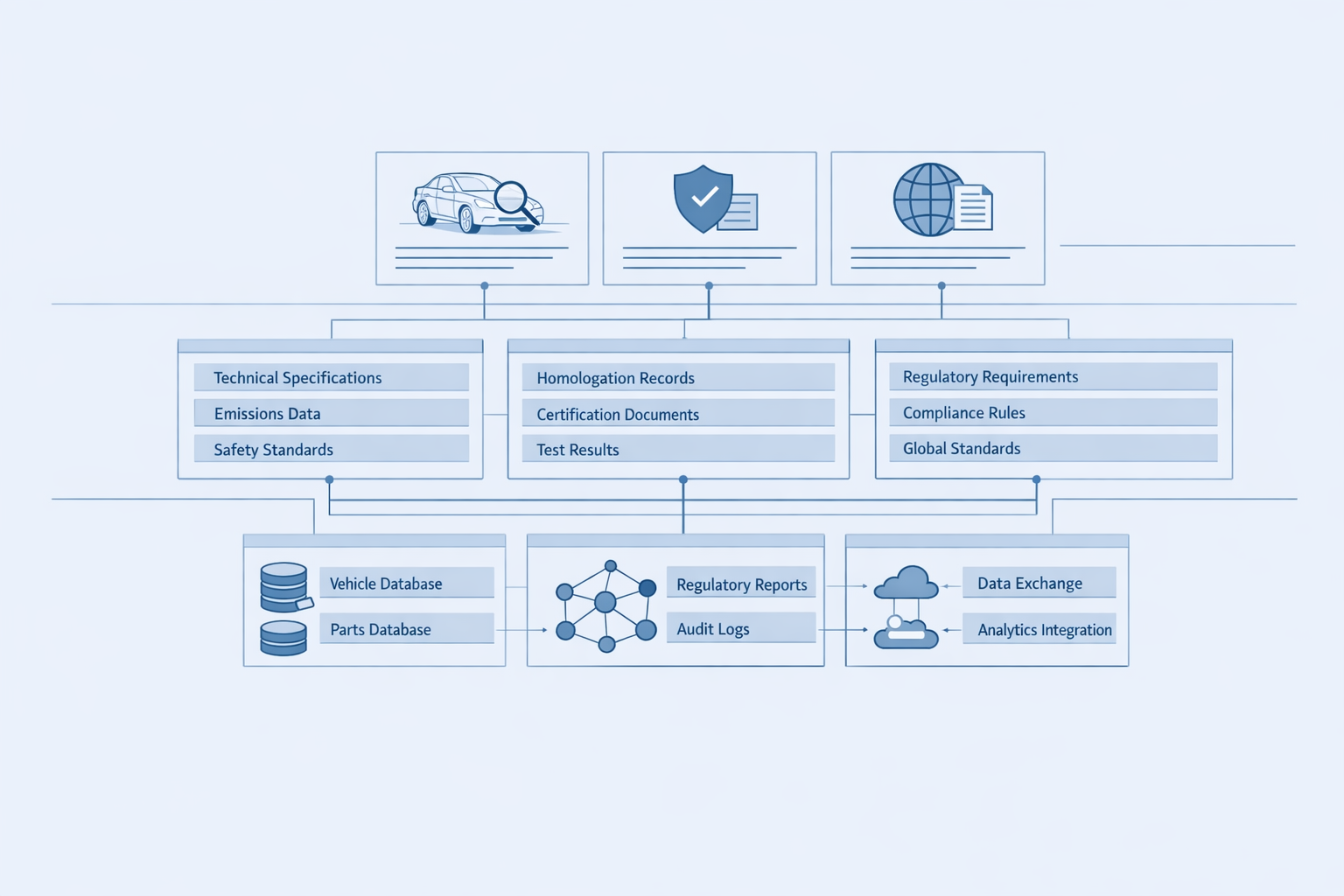
Structured vehicle data allows regulatory systems to process compliance information consistently. Learn why structured data is essential for automotive regulation.

Learn why consistent vehicle regulatory data is critical for automotive compliance and how inconsistencies can affect regulatory verification processes.
Cross-border exchange layers, system synchronization and shared regulatory datasets across European authorities.

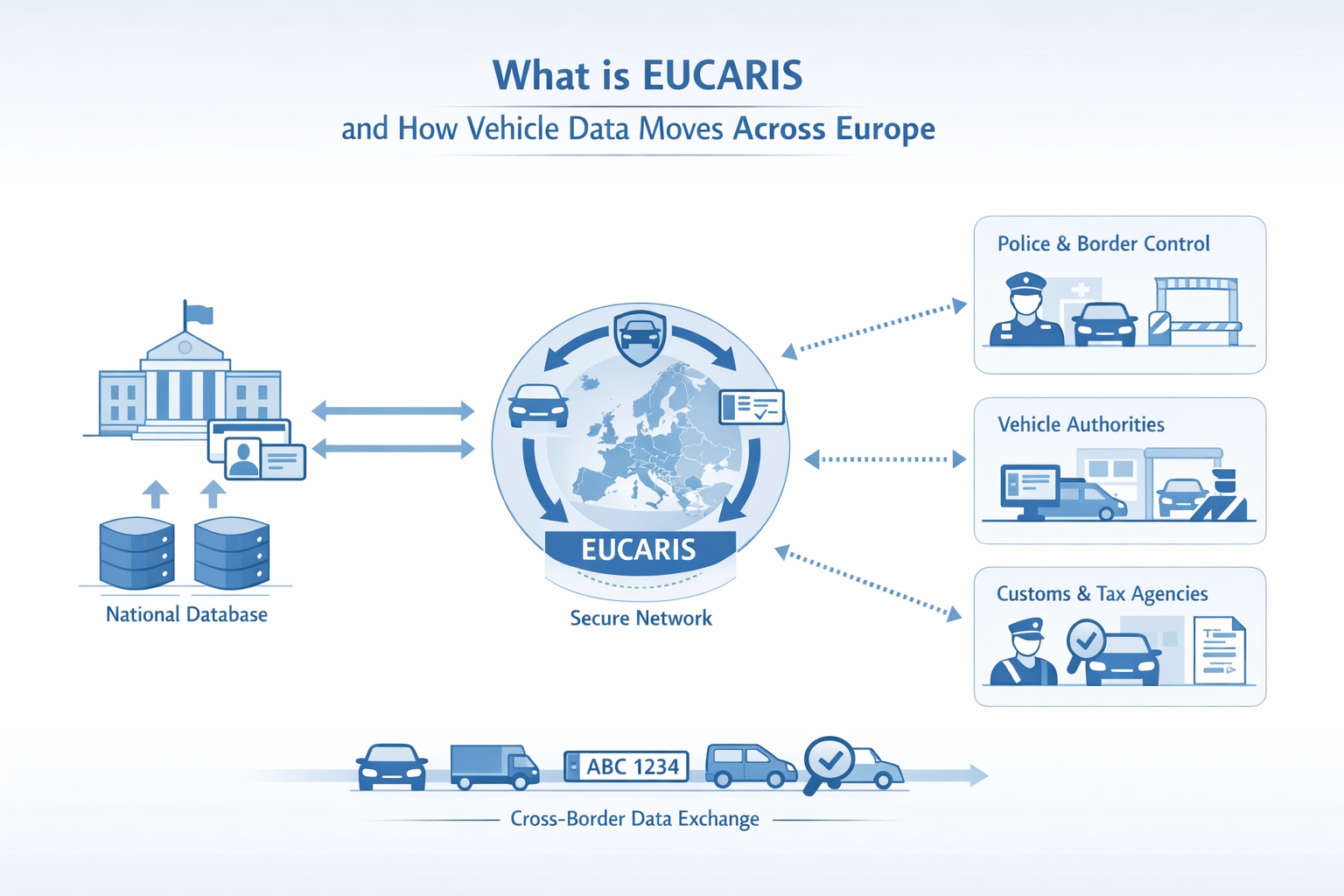
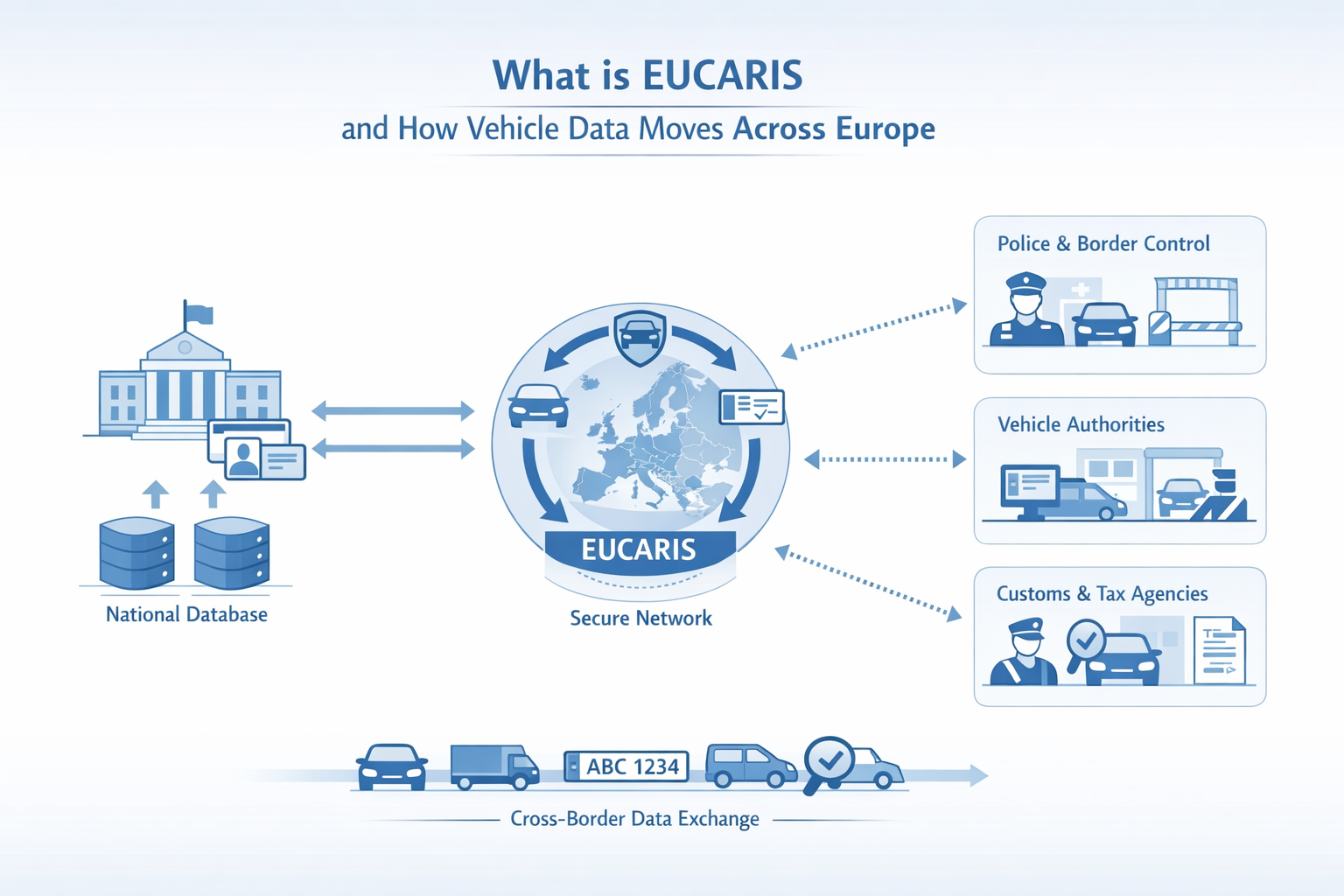
Learn what EUCARIS is and how vehicle regulatory data is exchanged between authorities across Europe.

Learn how EUCARIS and National Access Points support electronic CoC data exchange and why trusted upstream vehicle data matters before authority submission.

Learn how vehicle compliance systems coordinate regulatory data across approval, verification, and registration processes.

Vehicle compliance data must remain aligned across multiple regulatory systems. Learn why data alignment is essential for automotive compliance.

Discover why regulatory vehicle data must remain synchronized across automotive systems and how synchronization supports reliable compliance verification.
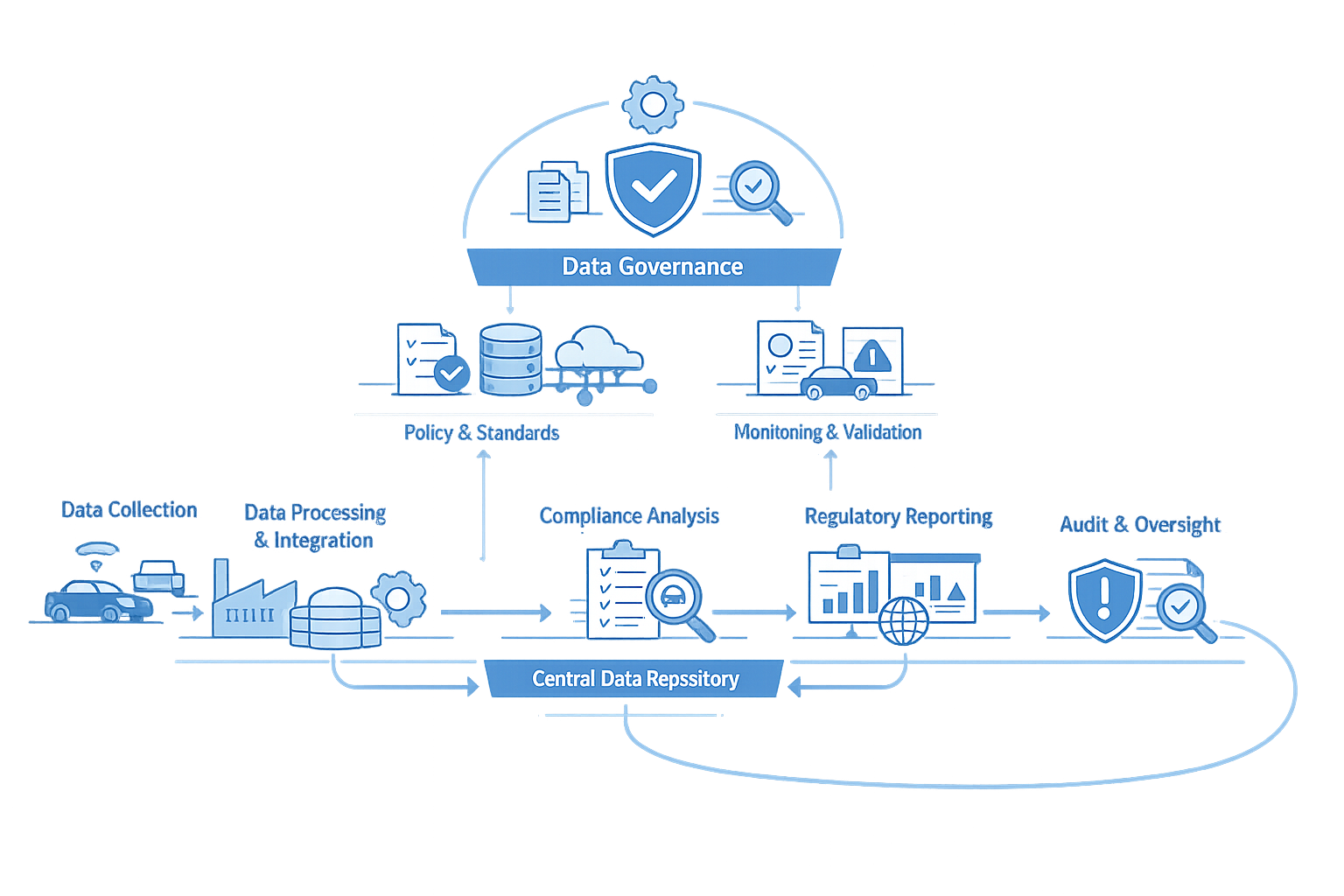
Validation, governance, workflow control and infrastructure topics for maintaining reliable compliance datasets over time.

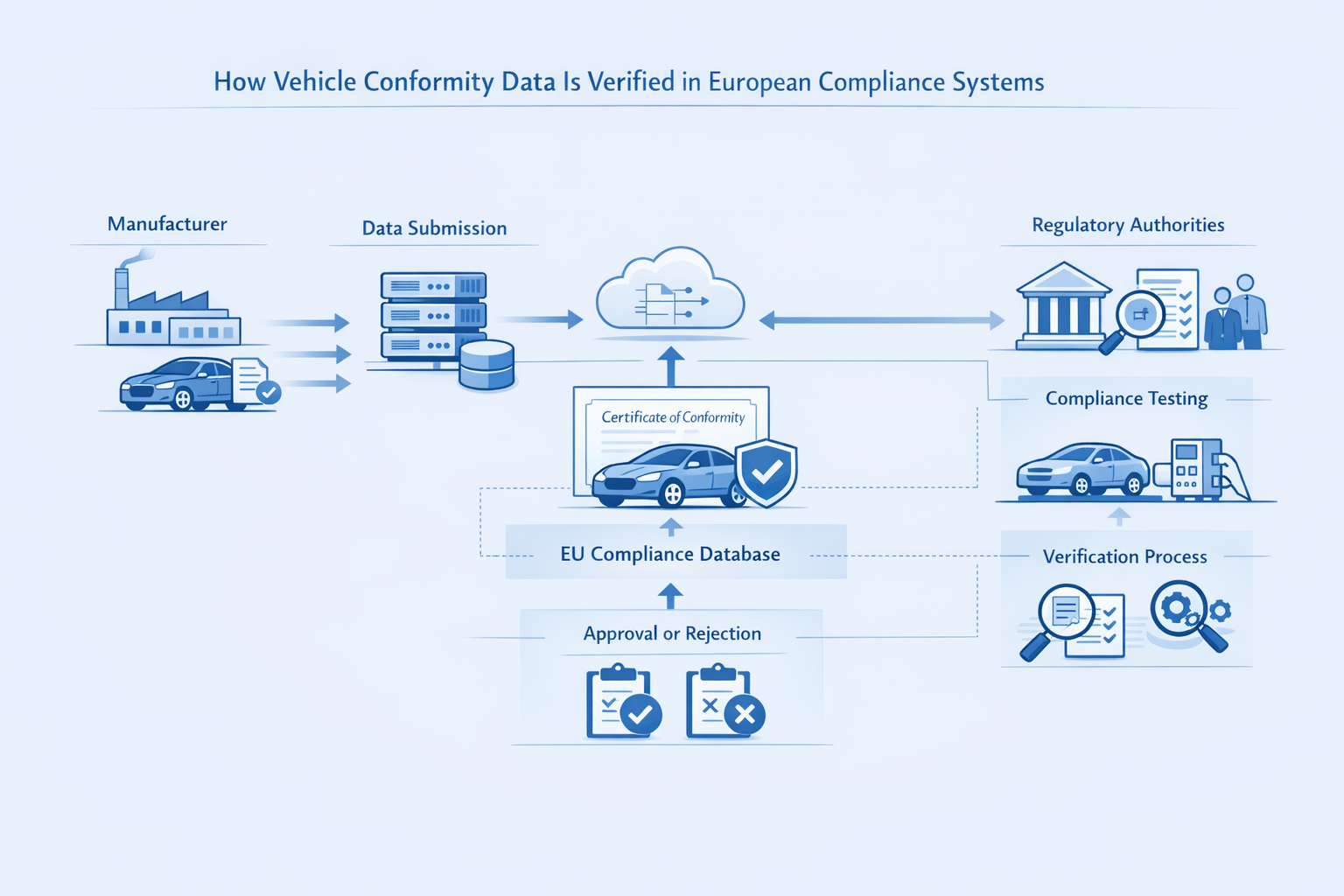
Learn how vehicle conformity data is verified within European compliance systems and why accurate regulatory datasets are essential.

Managing vehicle compliance data across regulatory systems can be complex. Learn why structured vehicle data management requires specialized expertise.

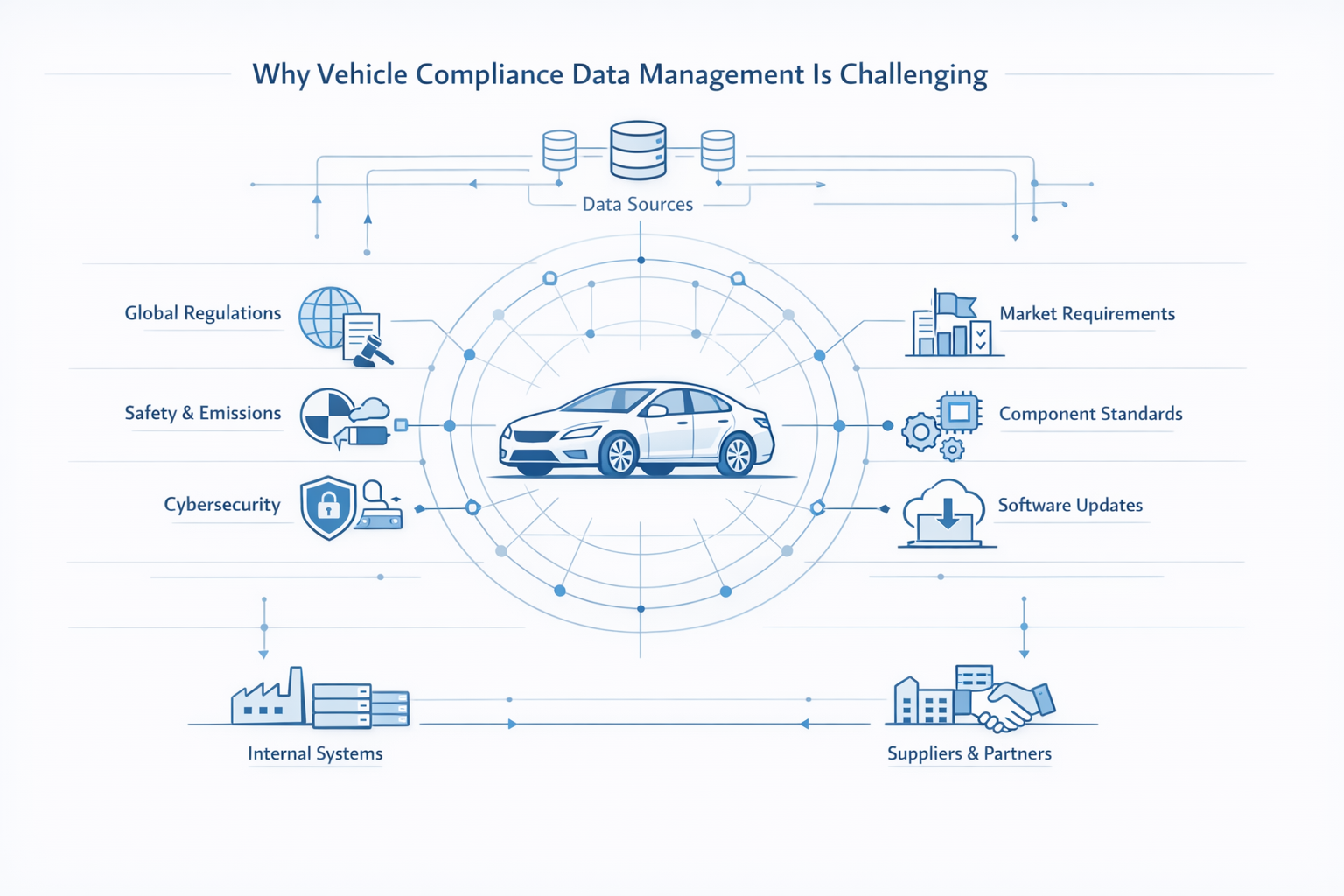
Managing vehicle compliance data can be complex. Learn about the common challenges organizations face when handling regulatory vehicle datasets.

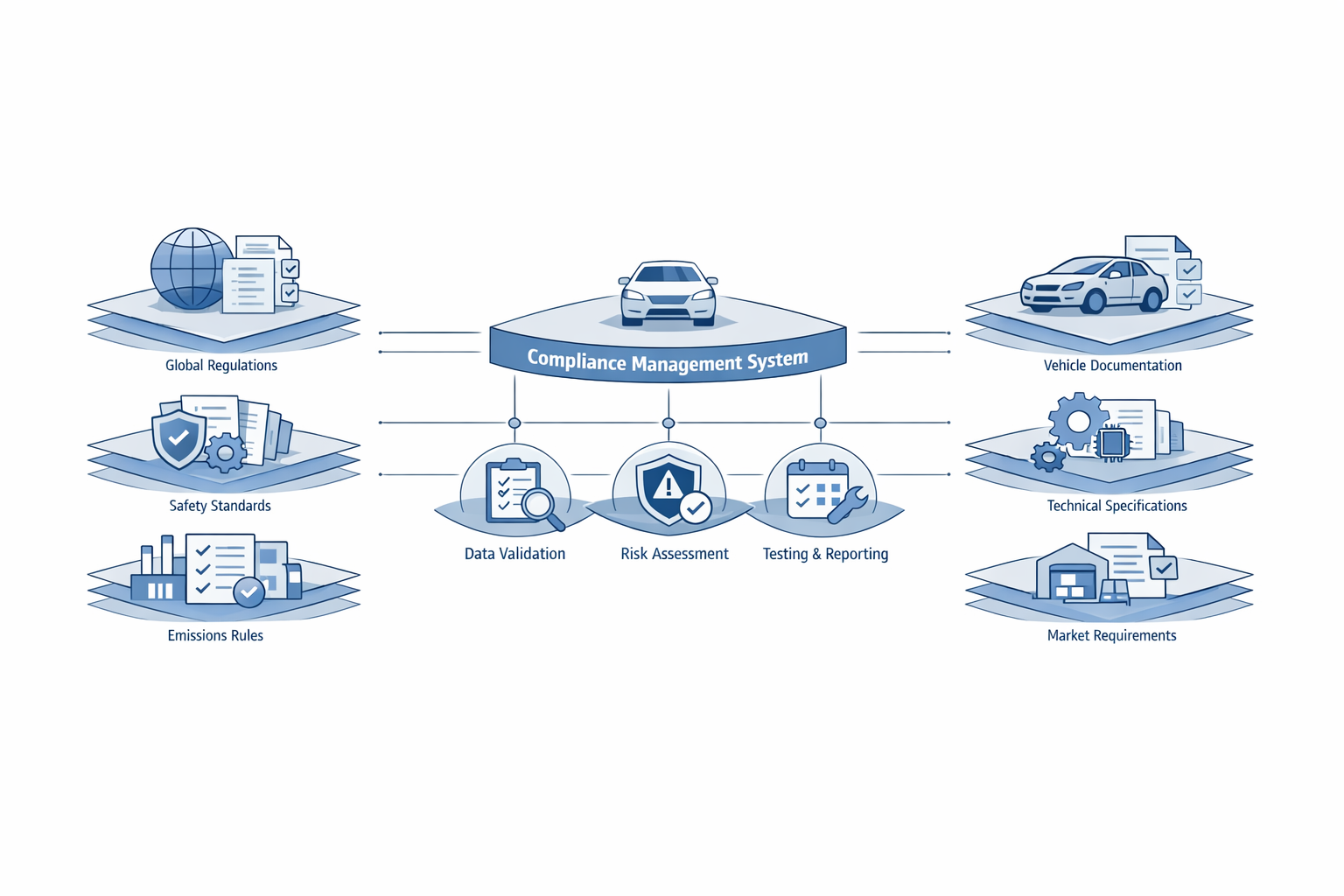
Vehicle compliance infrastructure helps regulatory systems manage complex datasets and verification processes. Learn how compliance infrastructure supports automotive regulation.

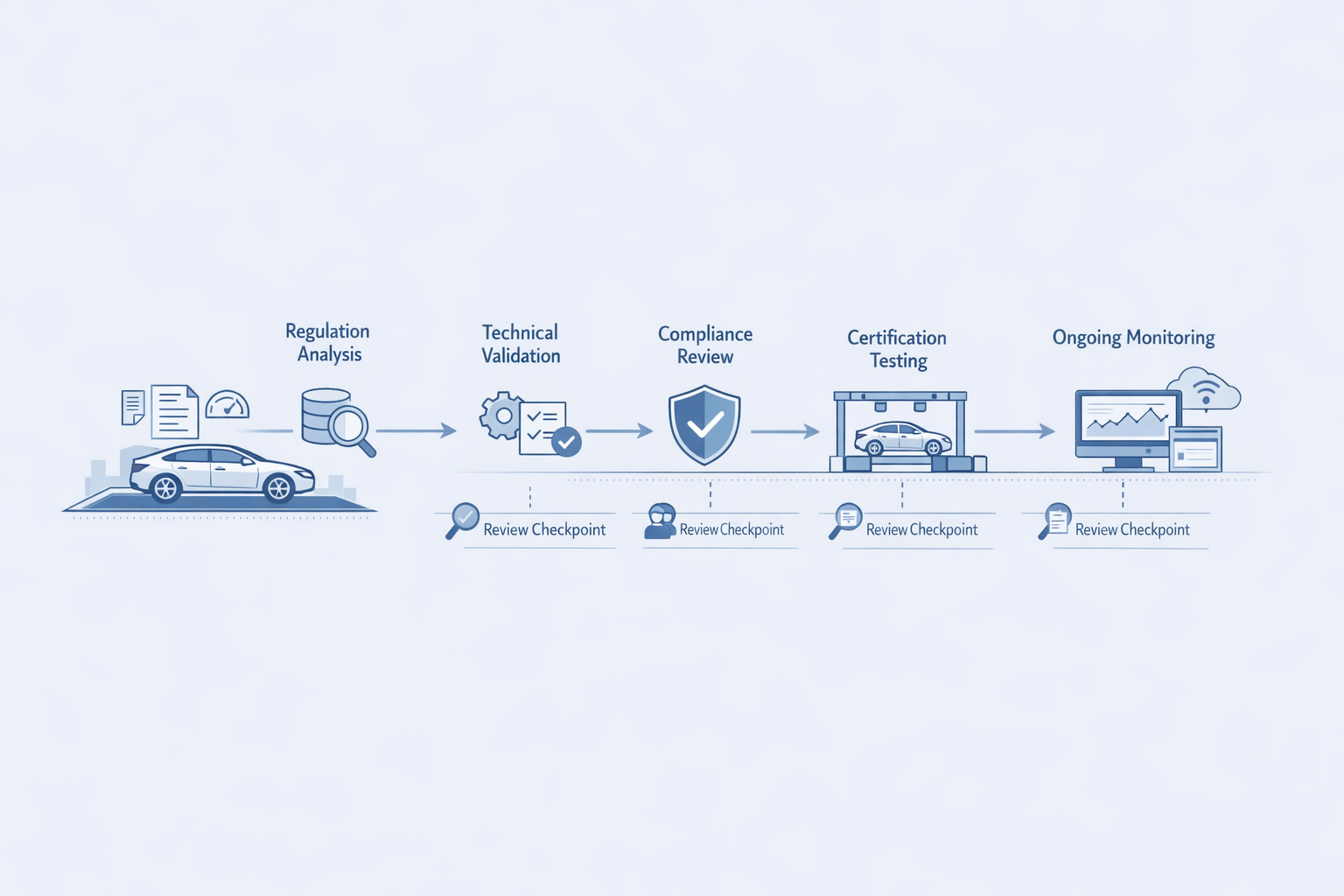
Vehicle compliance workflows require structured processes to manage complex regulatory data and ensure reliable compliance verification.

Learn why automotive regulatory data requires strong governance and how proper data management supports reliable compliance processes.

Vehicle regulatory data plays a critical role in compliance systems. Learn why managing this data carefully is essential for reliable regulatory verification.

Automotive compliance data must be continuously validated to maintain regulatory integrity. Learn why validation processes are critical for vehicle compliance systems.
Geo-intent guides for Europe, the US and China that translate the core compliance cluster into manufacturer expansion and market-entry scenarios.

Learn what manufacturers need to prepare for electronic Certificates of Conformity in Europe, from approval references to structured data readiness.

Understand how manufacturers prepare for EU vehicle compliance through type approval, structured data governance and controlled release workflows.

Compare US vs EU vehicle compliance and understand why manufacturers must adapt approval logic, data models and release controls when targeting Europe.

Learn what China-based manufacturers should expect when preparing for EU vehicle approval, structured conformity data and European market entry.
Full Blog
The hub page summarizes core topic clusters, while the blog index exposes the full publication flow by category and date.
Use the knowledge hub, authority page and pillar articles together to find the right entry points, then contact our team for operational support.
It groups the core eCoC, IVI, vehicle type approval and regulatory data topics into one crawlable authority layer.
The best starting points are the main eCoC article, the vehicle type approval guide, the IVI guide and the EUCARIS guide.
It reduces fragmentation by linking the pillar pages and the deeper technical guides inside one structured navigation surface.
Yes. It routes readers from education into the broader authority cluster and then toward contact-ready pages.
The hub covers eCoC, vehicle type approval, IVI, EUCARIS and compliance data management topics.