Vehicle Type Approval26 April 2024
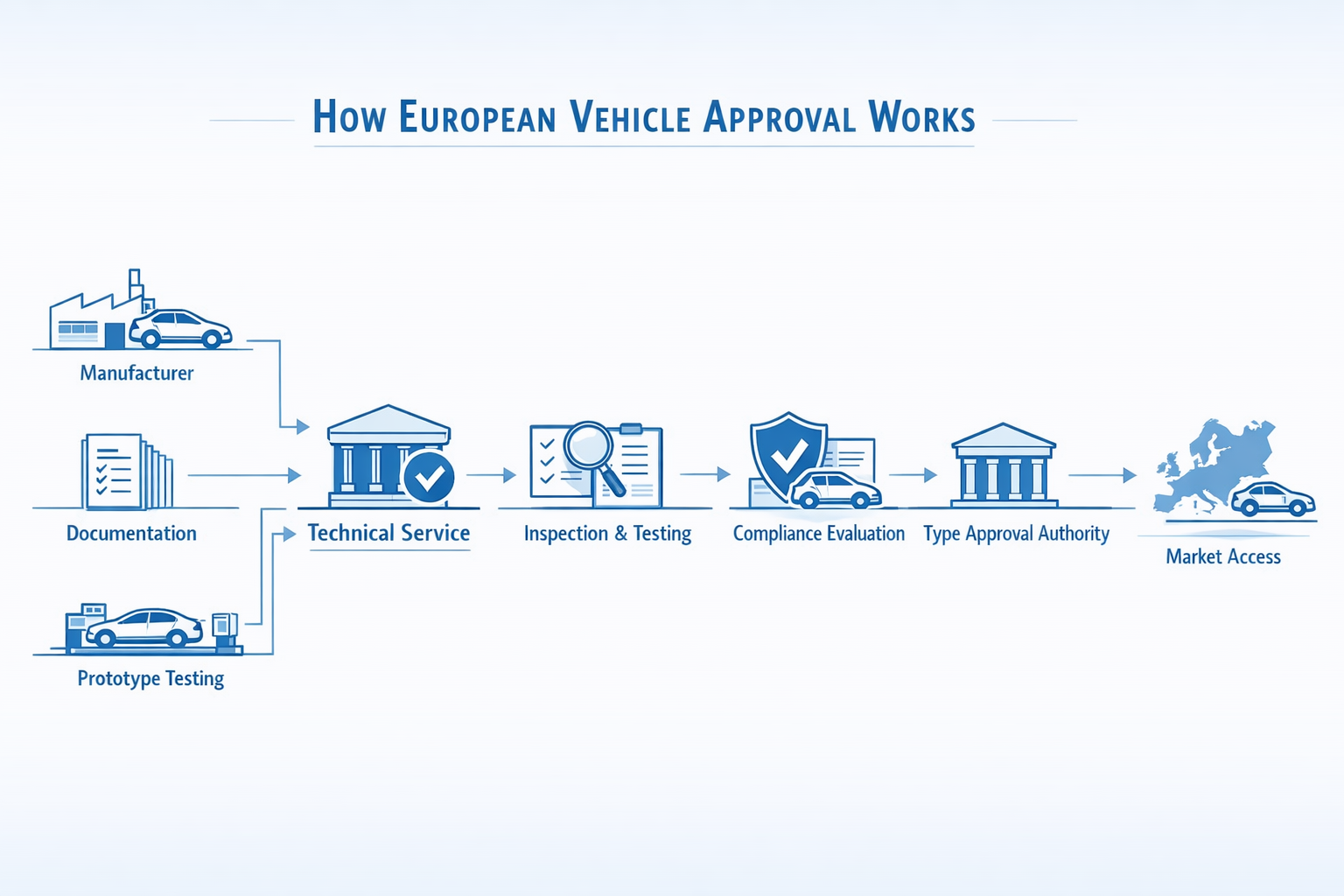
How European Vehicle Approval Works
Learn how the European vehicle type approval system works and how vehicles are verified for compliance before entering the EU market.
Read time: 8 min readRead more
Knowledge base
Clear, source-aware guidance for manufacturers preparing vehicle data, approval references and electronic conformity workflows.
Start with the regulatory, operational and technical guides most useful to manufacturer teams.
Learn how the European vehicle type approval system works and how vehicles are verified for compliance before entering the EU market.
Choose the subject that matches the regulatory or operational question you need to resolve.
Vehicle Type Approval
The Vehicle Type Approval section brings together practical explanations and implementation guides about vehicle type approval guides. The articles help manufacturer teams understand how the subject connects with eCoC operations, IVI structures, type approval and regulatory data management.
Readers who need the fundamentals can begin with an introductory guide. Teams looking for detail about data flow, validation, ownership or technical infrastructure can move directly to the relevant implementation article. Each page is intended to answer a distinct operational question.
There are currently 1 published articles in this section. New readers can start with the general explanation and then continue to the technical or operational guide that matches their responsibility.
Our team can help connect this category to your eCoC rollout, IVI, vehicle type approval and broader compliance infrastructure needs.
It brings together introductory explanations and technical guides about vehicle type approval guides.
Start with the general explanation, then continue to the technical guide that matches your data, validation or workflow needs.
Start with the introductory guide, then continue to the knowledge centre, vehicle compliance guide or relevant technical article.
The articles in this category show how vehicle type approval guides supports eCoC generation, data validation and broader compliance operations.
Manufacturers, homologation teams, regulatory consultants and operations teams working on vehicle compliance can use it as a starting point.
Browse the latest practical articles for manufacturer, homologation and technical teams.
Learn how the European vehicle type approval system works and how vehicles are verified for compliance before entering the EU market.
It helps manufacturers find practical guidance on eCoC, type approval, IVI, EUCARIS and regulatory data.
Start with the eCoC, vehicle type approval, IVI or EUCARIS guide that matches the issue you are working on.
Choose a category to narrow the articles to the regulatory or operational subject relevant to your team.
They are written for vehicle manufacturers, homologation teams and technical teams preparing conformity data and documents.
Yes. If a guide does not answer your question, use the contact page to describe your vehicle category, approval scope and current process.
Contact
Tell us what you are trying to solve in one short message. Share your name and email; our team will respond directly with the right next step.
Use the form here or open the full contact page for more context.
Open full contact page